
Key Insights from Xavier Demilly at ESCP’s Digital Spark 2025
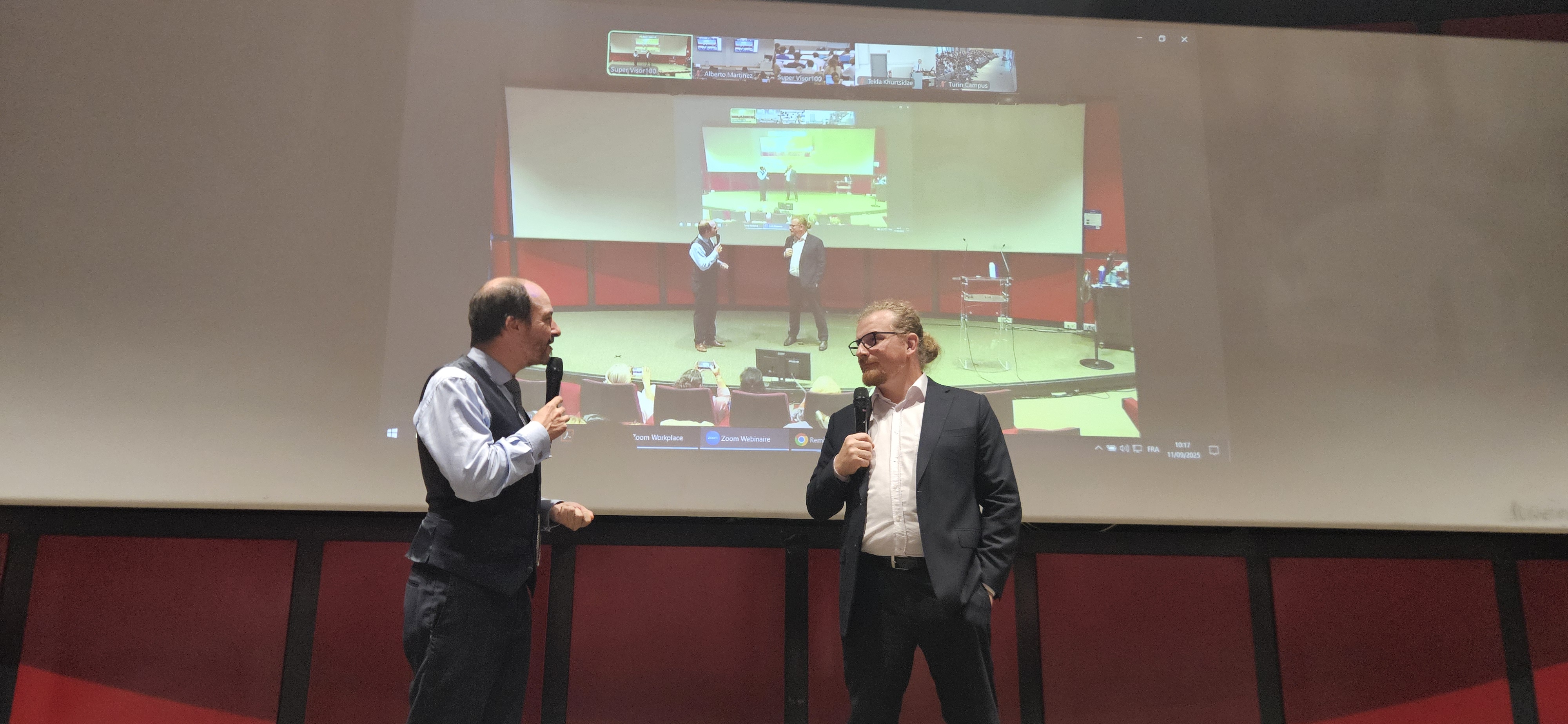
On September 11, 2025, ESCP Business School gathered its 1,350 Master in Management (M1) students across five campuses (Berlin, London, Madrid, Paris, and Turin) for Digital Spark, a foundational seminar dedicated to digital transformation. Designed as the starting point of their two-year journey, the program combines online learning, cross-campus conferences, and team-based analytical work to prepare future managers for the challenges of the digital age.
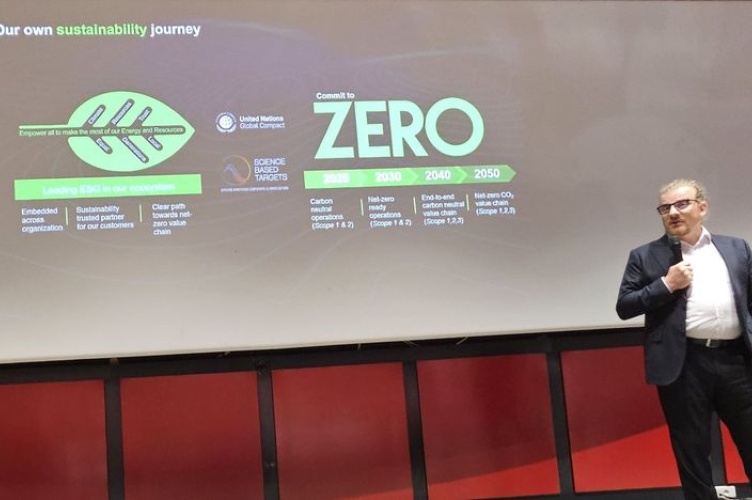
Among the keynote speakers was Xavier Demilly, VP Business Transformation – Head of Projects at Schneider Electric and Ambassador of the Digital Transformation for Sustainable Impact Chair, who delivered a clear and pragmatic message: digital transformation is not primarily about technology, it is about responsibility.
Access to information is no longer the challenge; discernment is
Instead of focusing on technology itself, Xavier began with a reflection on information overload. In a world of smartphones, social media, and AI-generated content, leaders must develop the ability to distinguish reliable information from noise and use it responsibly.
This shift marks the beginning of digital responsibility. Leaders must not only use data but question it, interpret it, and ensure it is handled ethically.
Digital transformation is not an IT upgrade; it is a business and human challenge
Drawing on Schneider Electric's experience, Xavier showed that lasting transformation depends on aligning people, processes, governance, and technology around a common vision.
Operating in more than 100 countries, Schneider Electric has worked to simplify complexity, foster collaboration, and improve decision-making across the organization. In this context, data, governance, and digital tools are not goals in themselves, but enablers of agility, performance, and sustainability.
For students, a key takeaway was that successful transformation requires as much attention to people and change management as to technology.
Innovation creates opportunities, but also responsibilities
Through examples ranging from AI in healthcare to IoT for climate monitoring and real-time financial services, Xavier illustrated the transformative potential of digital technologies.
Yet every breakthrough raises important questions: Are decisions based on accurate and fair data? Could predictive systems reinforce inequalities? Are we adequately considering the environmental footprint of digital technologies?
Meeting these challenges requires more than technological expertise. It relies on robust and structured data governance, built around three principles highlighted by Xavier: segregation of duties, a single source of truth, and continuous monitoring and compliance. These foundations help create the trust needed for innovation to scale responsibly.
Digital transformation, he argued, can open a “Pandora’s box” if not handled responsibly. Innovation must therefore be balanced with ethical reflection, strong governance, and sustainable thinking.
Tomorrow's leaders will be defined by capabilities, not by technical expertise alone
Addressing the students directly, Xavier outlined five capabilities that will be essential for responsible leadership in the digital age:
- Vision with purpose – Technology must serve a clear, human-centered mission.
- Ethical intelligence – Leaders must constantly assess fairness and impact.
- Data fluency – Not technical expertise, but enough understanding to bridge business and technology.
- Sustainable thinking – Digital progress must align with environmental responsibility.
- Collaborative spirit – Data transformation requires cross-functional cooperation.
Data is not simply a resource to extract; it is a strategic asset to cultivate
To conclude, Xavier invited students to rethink the role of data within organizations. When properly governed, it enables insight, transparency, and innovation. When mismanaged, it creates risk, inefficiency, and loss of trust.
In that sense, digital transformation is less about adopting new tools and more about building responsible systems.
For ESCP's future managers, the takeaway was clear: mastering the digital age means mastering responsibility — toward data, toward people, and toward society.
Campuses