
Written by the ESCP International Politics Society
Amid geopolitical tension and rising climate urgency, COP30 offered fewer breakthroughs than many had hoped. ESCP student and Head of Content for the ESCP International Politics Society, Maxime Pierre, explores what the summit revealed about global cooperation and the road ahead.
“It is mankind and his activities which are changing the environment of our planet in damaging and dangerous ways [...] The damage is being done. What do we, the International Community, do about it?”
Those dire words were uttered nearly 40 years ago by then British Prime Minister Margaret Thatcher at the 1989 United Nations General Assembly. That speech served as a wake-up call for many that human-caused climate change was a scientific certainty and a challenge that humanity ought to face with urgency and unity.
Thatcher also pointed out that this looming crisis could be fought head-on, as “conventional, political dangers – the threat of global annihilation, the fact of regional war – appear[ed] to be receding”. The optimistic days of the post-Cold War era now feel distant.
Today, far from receding, those threats are resurfacing at a worrying pace, endangering global cooperation in favour of national interests. Singling out culprits for the current breakdown of globalisation is a futile exercise, as all nations will suffer as a result, albeit in cruelly unequal fashion.
Limited progress amid geopolitical tension
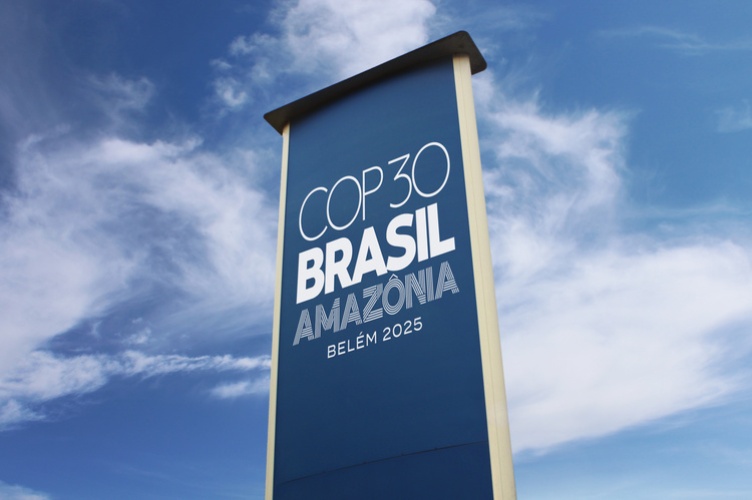
A tense atmosphere marked the COP30 negotiations in Belém, Brazil. The United States, the world's second-largest polluter – and historically the first – withdrew from the negotiations for the second time in a decade. Early on, ongoing trade tensions jeopardised the conference, with some delegations, notably the EU, threatening to walk out until the very last moment.
Headlines such as “COP30 saved face, but not the climate” suggested that the final text signed by 194 countries was more about preserving a battered multilateralism, with the climate relegated to a secondary concern.
When I asked several participants about the outcome of the event, the response was “no major failures, no major disappointments” – a low bar for success. The final agreement mentioned neither "fossil fuels” nor any “roadmap”, both removed after an intense fight by oil-producing nations. Some notable progress was made in climate finance, tropical forest protection and combating climate disinformation, all with numerous caveats attached.
Indeed, the talks may not have enforced the Paris Agreement in an urgent and binding manner, but the very fact that an accord of this scale could be reached under the current geopolitical situation should be applauded.
A reality check for global climate diplomacy
Every generation has had its moments of lucidity: Margaret Thatcher's 1989 UN address; Al Gore's 2006 Oscar-winning documentary An Inconvenient Truth; Laurent Fabius striking his gavel to conclude the Paris Agreement in 2015; and Greta Thunberg's launch of the Fridays for Future movement just three years later.
COP30, however, was no such moment. It was, rather, a bleak reality check that the current format of these consensus-based negotiations is not moving nearly fast enough to avert the worst effects of a warming Earth. It also showed the limits of talks on climate change that have been infiltrated by a record number of oil, gas and coal lobbyists.
But it is not all doom and gloom. It is important to note that one year before the 2015 Paris Agreement, the Intergovernmental Panel on Climate Change (IPCC) warned that “warming is more likely than not to exceed 4°C above pre-industrial levels by 2100.” Recent projections put it at 2.7°C, a sign that these international gatherings are producing far more than just upsetting headlines.
The path forward and the cost of inaction
Unlike in 1989, science is now very clear on what the “international community must do.” Fatalism has no place in the current discourse – our planet is the only habitable one we have.
One attendee told me that there is no such thing as 'running out of time.' I agree. The limit of 1.5°C or the nine 'planetary boundaries' often cited by scientists are not points beyond which the planet and humanity cease to exist. These measurements are there to gauge progress and hold us accountable if they are exceeded. But with each delay, the environmental and financial costs of inaction are rising, often exponentially.
If willpower is lacking, creating a binding climate framework through the International Court of Justice could force public and private entities to comply.
The danger of inaction is clear. To end on a similarly sobering note as COP30 itself, I share the words of the UN's High Commissioner for Human Rights after the event:
“I often wonder how future generations will judge the actions – and fatal inaction – of our leaders in the face of the climate crisis in 50 or 100 years [...] Could today’s inadequate response be considered ecocide, or even a crime against humanity?”
Student commentary by:
 Maxime Pierre ESCP MSc in Hospitality and Tourism Management student and Head of Content for the ESCP International Politics Society
Related stories
A Decade After the Paris Agreement: New ESCP Research Shows Why Climate Pledges Need an Overhaul
Campuses