
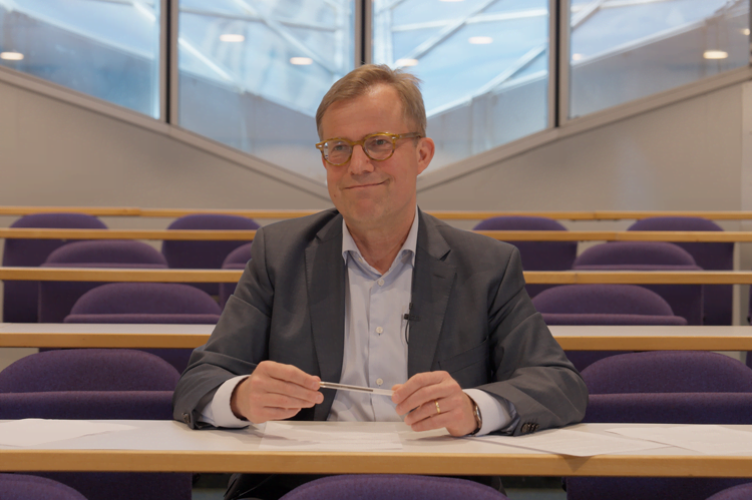
How ESCP Professor Michael Troege applies economic theory to real-world policy in finance, regulation and competition
When debates on financial regulation, competition policy or international trade surface in leading business publications such as the Financial Times, Le Monde or The Wall Street Journal, Professor Michael Troege is often among those helping to frame them. These contributions to the international public debate reflect a career spent connecting academic research, public policy, and real-world economic challenges.
For more than twenty-five years at ESCP Business School, Professor Michael Troege has worked at the crossroads of academic research and public policy. A specialist in finance, regulation, and antitrust economics, his research is driven by a central conviction: economic theory is not an abstract exercise, but a practical tool for decision-making.
All decisions rely on some type of theory—it is much better to make this theory explicit.
 Michael Troege
Full Professor of Finance
From academia to European policymaking
Early in his career, Troege joined the European Commission’s Directorate-General for Competition as an academic expert within the Chief Economist Team. There, he contributed to major regulatory cases as well as the Sector Inquiry into Retail Banking.
The experience proved formative. Working alongside leading economists from across Europe, he witnessed firsthand how advanced economic analysis could shape decisions with long-term consequences. It was, in his words, “a revelation”—a demonstration of how rigorous theory can directly influence major economic policy choices.
Since then, Troege has remained closely involved in European competition policy, focusing particularly on the intersection of finance, antitrust and regulation. His work has spanned issues such as bank bailouts, subsidies for risk finance, competition in financial markets, and the design of financial benchmarks.
Assessing banks in crisis
Last year, he co-organized a large-scale European Commission study on state aid to banks in difficulty, coordinating a team of over 20 academics and consultants. Drawing on 13.2 GB of raw data from 2007 to 2021, the study examined how public support measures totalling 3 trillion euros affected financial stability, competition, and long-term bank viability.
Its conclusions were striking: The state aid that was carefully calibrated under DG Competition’s guidelines restored stability and allowed viable banks to return to profitability within a few years. At the same time, distortions to competition remained limited and temporary.
For Troege, this points to an underappreciated success: European authorities, he argues, have not received sufficient recognition for efficiently and successfully managing this exceptionally complex policy challenge.
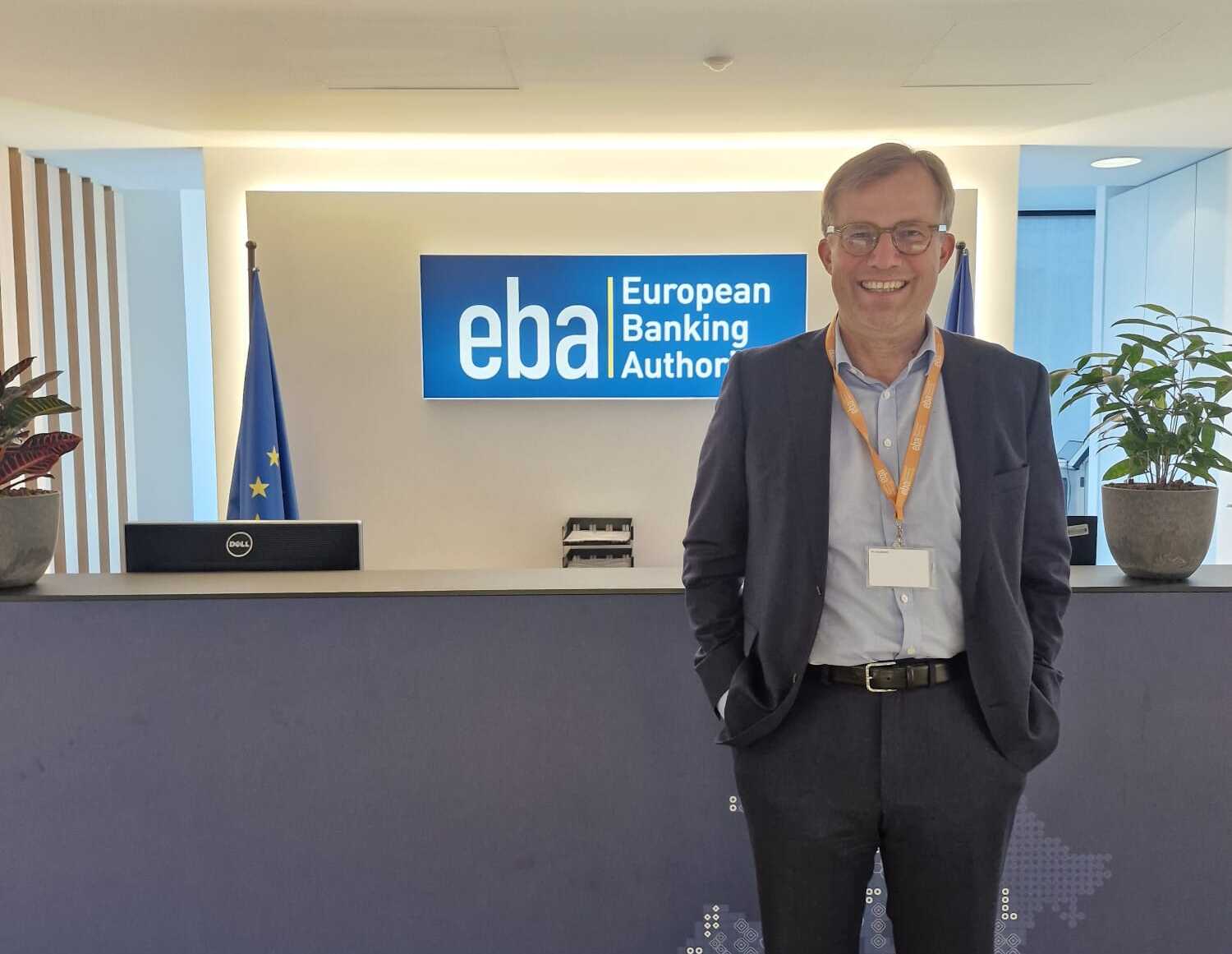
In 2026, this expertise was formally recognised with his appointment as an “Independent Top-Ranking Academic” to the Banking Stakeholder Group of the European Banking Authority. There, he contributes to ongoing debates on banking regulation. One of his priorities there is simplification: as he notes, regulatory frameworks have become so complex that they risk being both costly and inefficient. The challenge now is to reduce that complexity without undermining financial stability.
Why theory matters
A defining feature of Troege’s work is his insistence on the continued relevance of economic theory—especially in a complex world. Trained in mathematics, finance, and microeconomics across Munich, Paris, Berlin, and Chicago, he combines formal modelling, empirical analysis, and policy experience.
One of the important roles of theory, he argues, is to distinguish private interests from the broader public good. Across domains such as competition policy, financial regulation, and international trade, stakeholders often perceive policies through a narrow lens: firms typically see competition as a threat and regulation as a constraint, while tariffs are often viewed as protective or beneficial.
Yet economic analysis reveals a different picture. What benefits a concentrated group—such as producers—may impose diffuse costs on consumers. Because these costs are less visible, they tend to be underrepresented in public debate.
Without a clear theoretical framework, Troege warns, policymakers may be swayed by the most vocal or organised interests rather than by overall welfare considerations.
In this sense, theory acts as a corrective. It clarifies that while competition and regulation may impose costs on some actors, they generally improve collective welfare. Conversely, policies like tariffs, though politically attractive, often reduce it.
Beyond general rules: when exceptions matter
At the same time, Troege emphasises that theory does not stop at broad conclusions. It also helps identify the conditions under which these conclusions may no longer hold.
His research in international trade illustrates this nuance. While tariffs are typically welfare-reducing, there are exceptions. As early as 1844, economist Robert Torrens showed that large countries can benefit from import tariffs: by imposing tariffs, they may shift the terms of trade in their favour, forcing foreign producers to lower prices.
Such policies may harm global welfare, but still benefit the country imposing them—at least in the absence of retaliation. This insight remains relevant today and may for example help explain why large economies such as the US appear relatively resilient to protectionist measures.
More broadly, Troege’s work highlights how imperfect competition and asymmetric information reshape economic outcomes. In such environments, markets do not always deliver efficient results, and targeted government interventions—whether tariffs or subsidies—can, in some cases, improve welfare by correcting existing distortions.
The balance between competition and cooperation
Across his research, a broader perspective emerges: economic systems are not self-regulating mechanisms operating in a vacuum. They are shaped by institutions, incentives, and power structures. While competition is essential, so too is cooperation—between firms, banks, individuals, and nations. Economic growth depends on this delicate balance between cooperation and competition. This does not arise spontaneously but must be supported by robust legal and institutional frameworks.
Free markets are not free because there is no regulation. They are free because there are rules that keep them free.
Michael TroegeFull Professor of Finance
Teaching, research, and public debate
Alongside his research and policy work, Troege remains deeply engaged in teaching. At ESCP, he leads the Investment Banking and Finance specialisations within the Master in Management programme and teaches courses in financial engineering, corporate finance, and financial institutions.
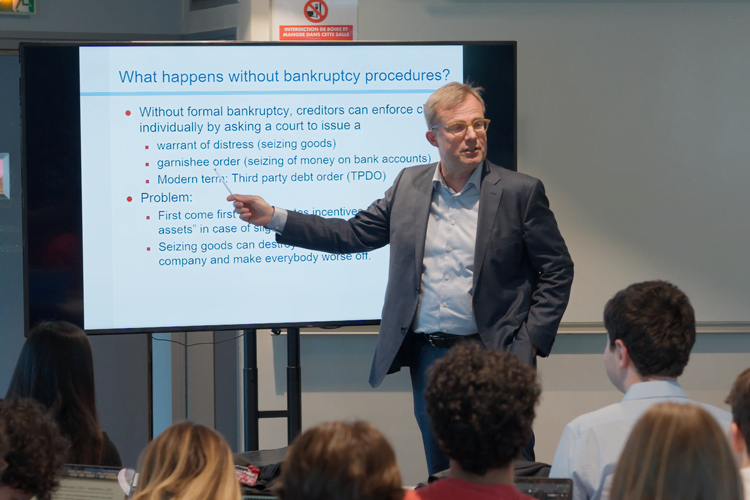
Whether in the classroom or in policy discussions, his approach is consistent: not to oversimplify economic issues, but to confront their complexity head-on. Good policy, he argues, is not about easy answers, but about understanding trade-offs—and accepting their costs.
For Michael Troege, economic theory is ultimately a tool for clarity. It provides a structured way to think about difficult choices and to ask, in each case, which policies truly serve the common good.
Related Article
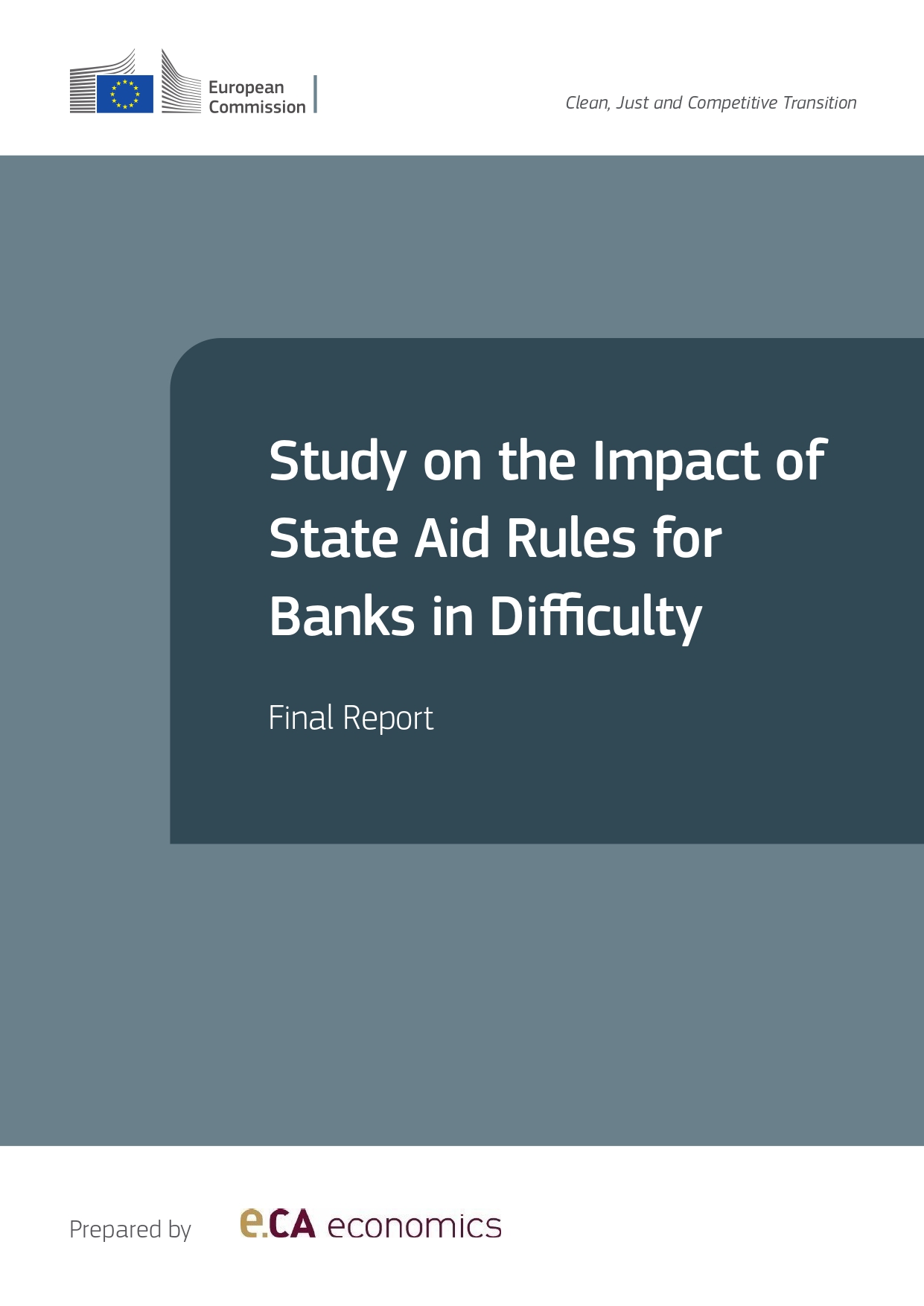
Study on the Impact of State Aid Rules for Banks in Difficulty
Campuses