Inside aviation transformation: how Lufthansa Systems’ CEO leads change, innovation, and resilience
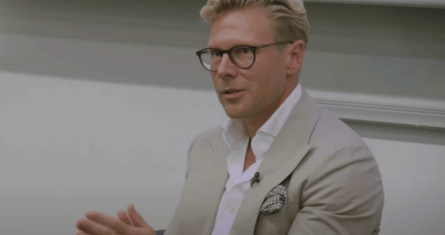
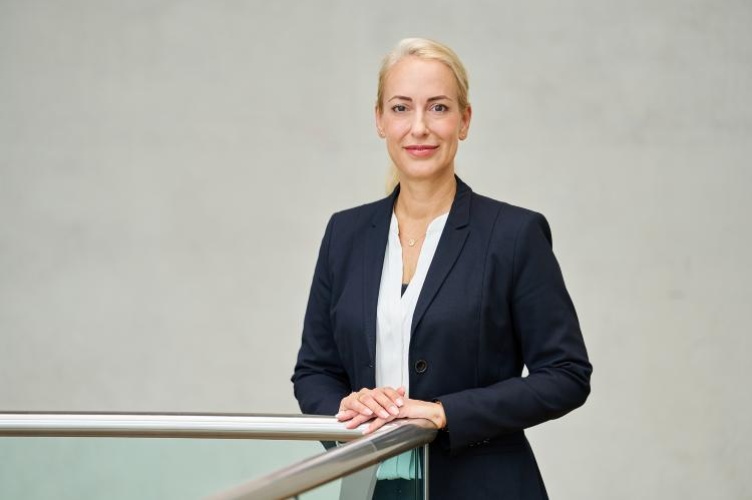
At ESCP Berlin Campus, the third edition of the Entrepreneur Conversations: Innovation & Beyond series brought together students, alumni, and industry professionals for a live discussion with Stefanie Neumann, CEO of Lufthansa Systems. The hybrid event, combining a live audience with a recorded podcast format, explored how leadership, digital transformation, and innovation intersect in one of the most complex global industries. From the outset, the conversation addressed a central question: how do organisations transform in environments defined by constant disruption?
A leadership approach grounded in listening
Stefanie Neumann opened the discussion with an unexpected answer to a simple question. Rather than highlighting achievements or strategy, she described herself first as “a listener.” This perspective shaped her definition of leadership. For Neumann, leading an organisation begins with understanding people: their motivations, concerns, and perspectives. Strategy and execution follow, but only when teams are aligned and supported. In practice, this means combining clear direction with a strong focus on collaboration and trust.
Managing the digital complexity of aviation
Lufthansa Systems plays a critical role in global aviation, although largely behind the scenes. The company develops and operates digital solutions that support airlines across the entire value chain, from ticketing and route planning to real-time flight operations. As Neumann explained, it acts as the “digital mirror of an airline,” enabling processes that begin years before a flight and continue until passengers reach their destination.
Operating at the intersection of aviation and information technology presents a structural challenge. Airlines make long-term decisions about fleets and routes, often years in advance, while digital systems evolve rapidly. Aligning these different time horizons requires both technical expertise and the ability to translate innovation into operational value.
Rethinking innovation in practice
During the discussion, Neumann challenged conventional views on innovation. Rather than positioning it as a broad or abstract concept, she described a focused and pragmatic approach. At Lufthansa Systems, artificial intelligence is not a future ambition but an existing capability, already embedded in areas such as route optimisation and operational decision-making. However, the main challenge is no longer technological. It lies in integrating these capabilities into everyday work and ensuring that teams trust and adopt them. This creates a dual dynamic: while innovation can be implemented quickly at the product level, it often takes longer to be accepted within organisational processes.
Transformation as a deliberate process
The distinction between change and transformation became a key theme of the conversation. Neumann described change as something that happens to organisations, while transformation is something they actively shape.
Lufthansa Systems is currently engaged in such a process, working to improve profitability and adapt its business model in a rapidly evolving market. This involves addressing cost structures, redefining sales approaches, and strengthening collaboration across teams. Transformation, in this context, is not a one-time initiative but a sustained effort that requires consistency, clarity, and patience.
Diversity as a driver of performance
When discussing diversity, Neumann moved beyond traditional categories. She emphasised that diversity is not limited to gender but includes cultural backgrounds, professional experiences, and different ways of thinking.
With more than 60 nationalities represented within Lufthansa Systems, this diversity becomes a strategic asset. It enables teams to approach challenges from multiple perspectives and strengthens the organisation’s ability to adapt in complex environments.
Creating a culture that enables innovation
Culture emerged as a decisive factor in driving transformation. Neumann highlighted that innovation requires an environment where ideas can be expressed early, even before they are fully developed.
In highly analytical organisations, this can be difficult. If only validated ideas are accepted, creativity is limited. By contrast, organisations that tolerate uncertainty and allow experimentation create the conditions for innovation to emerge. This also includes recognising the emotional dimension of change. Fear, doubt, and resistance are natural responses, and addressing them openly is part of effective leadership.
Navigating disruption as a constant
The aviation industry provides a clear example of operating under continuous disruption. From geopolitical tensions to operational challenges, uncertainty is a constant factor. As Neumann noted, disruption management is embedded in everyday operations.
However, responding to disruption is only part of the task. Organisations must also learn from these situations and translate experience into long-term improvements. Strengthening this learning capability is essential for resilience.
Sustainability and long-term thinking
Sustainability was addressed from both an environmental and strategic perspective. For Lufthansa Systems, sustainability means making decisions that ensure long-term viability while contributing to more efficient operations.
Digital tools play a key role in this effort. By optimising routes and improving operational efficiency, they can help reduce fuel consumption and emissions. At the same time, organisations must balance environmental objectives with competitiveness in a global market.
Advice for students and future leaders
The session concluded with practical advice for students preparing to enter the workforce. Neumann emphasised the importance of maintaining professional networks, not only for career development but also for exchanging ideas and solving challenges.
She also highlighted the need for patience in transformation processes. Progress is often gradual and not immediately visible, but consistent effort leads to long-term impact. Curiosity, combined with a focus on execution, remains a key driver of professional growth.
A human perspective on transformation
The third edition of Entrepreneur Conversations reinforced a central insight: innovation is not only about technology. It is about people, culture, and the ability to navigate complexity with clarity. Through her experience, Stefanie Neumann illustrated how leadership in a highly technical and global environment remains fundamentally human—grounded in listening, collaboration, and a clear sense of purpose.
Relevant links
Campuses