
Getting the social impact ecosystem together to learn from each other and get inspired
On 22 April 2026, ESCP Business School hosted the first edition of Connecting Social and Impact Economy at its Champerret campus. Bringing together nearly 70 participants, the evening reflected ESCP’s role as a meeting point between sectors, disciplines and perspectives—where academic insight, business practice and social innovation come together.
Opened by Gorgi Krlev, Associate Dean for Sustainability, the event set out to explore a central question: how can organisations create economic value while strengthening their social and environmental impact?
A meaningful institutional milestone
The evening was also a celebration of an important step forward for the School. In the presence of Pierre Pelouzet, Médiateur des entreprises at the French Ministry of the Economy, and Bertrand Pouilloux from the Conseil National des Achats (CNA), ESCP officially signed the Responsible Supplier Relations and Purchasing Charter (RFAR).
This commitment reinforces ESCP’s approach to responsible procurement—ensuring that its relationships with suppliers reflect principles of fairness, transparency and long-term sustainability.
Rethinking AI through a social lens
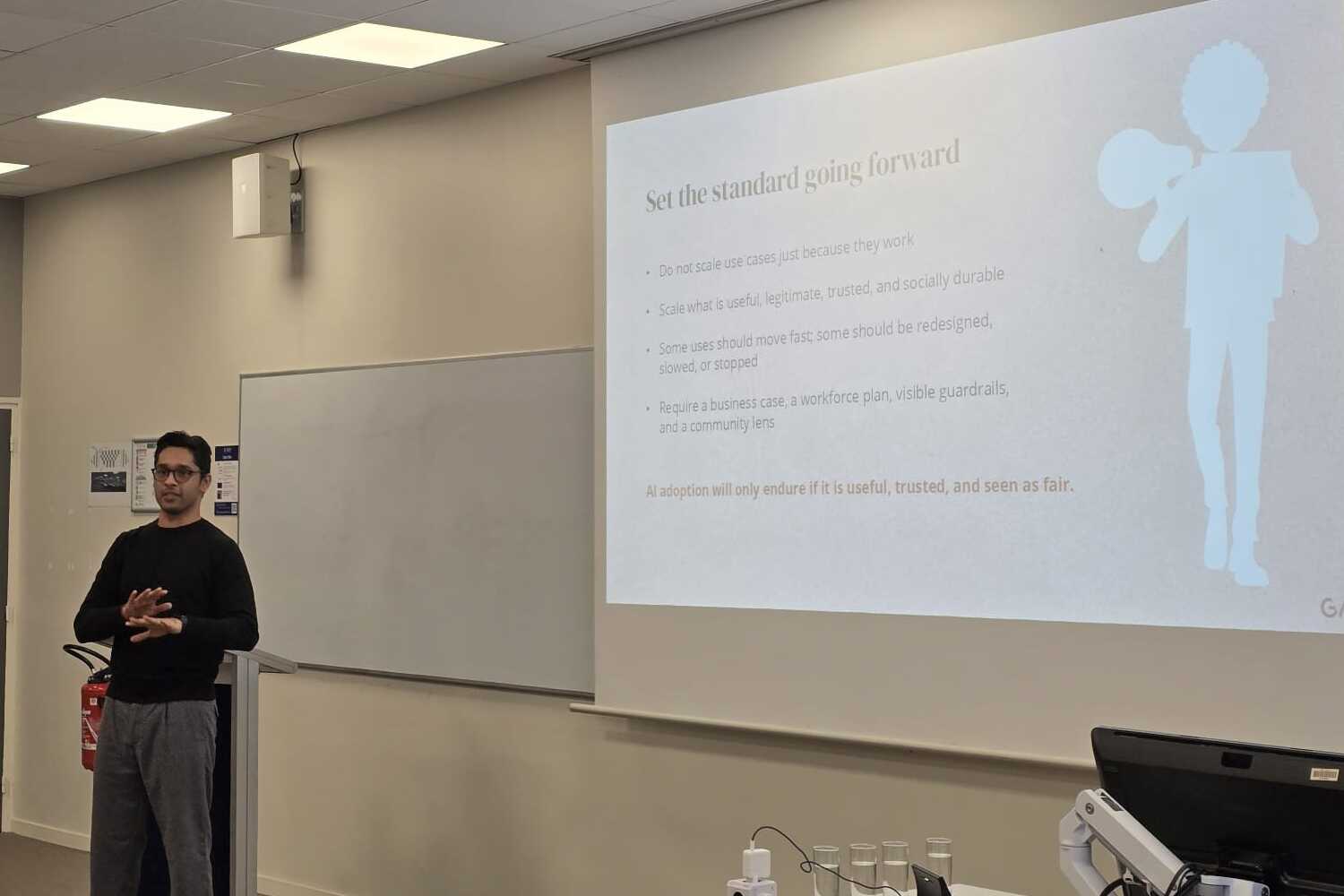
The opening conference speech by Giri Venkatraman (Global Operations Director at Publicis Groupe and ESCP alumnus) offered a strong perspective on artificial intelligence, focusing less on the technology itself and more on its broader consequences.
His observation? the conversation around AI is evolving from questioning whether it works to examining who benefits, who bears the costs, and on what terms. The key challenge lies in how organisations choose to deploy AI, particularly in relation to jobs, governance and environmental impact.
His intervention echoed a core concern shared across the audience: ensuring that innovation remains aligned with social progress, and that technological transitions are managed responsibly.
Inspiring solutions from the field
The evening continued with a series of pitches showcasing concrete initiatives from the social and impact economy:
- Koaloo, presenting a solution to strengthen supply chain resilience
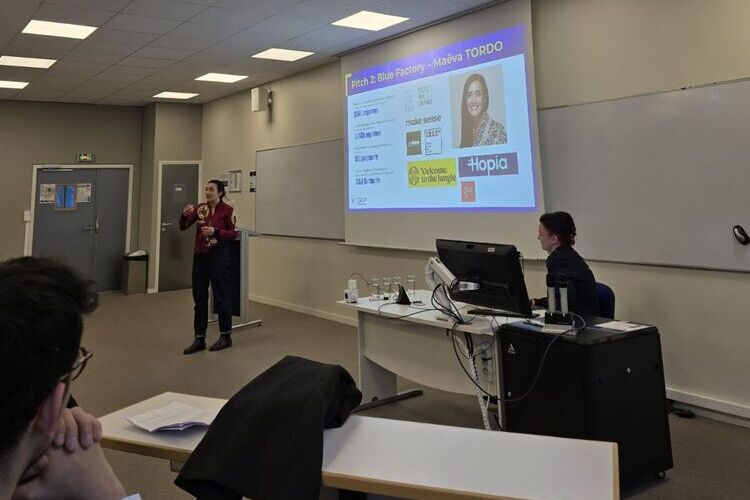
- Blue Factory, our very own startup incubator, highlighting its portfolio of impact-driven entrepreneurs
- Banque Populaire Rives de Paris, showcasing purpose-driven financial solutions supporting projects with strong social value
- ISA, introducing an innovative housing model for Alzheimer’s patients designed to recreate a sense of community
The idea behind these presentations was to illustrate how diverse actors—from startups to financial institutions—are developing practical responses to social and environmental challenges, each grounded in a clear sense of purpose.
A first step in a broader journey
This first edition of Connecting Social and Impact Economy was a success. It demonstrated ESCP’s ability to convene a diverse ecosystem of actors and to foster meaningful exchanges between them.
By combining strategic reflection, practical solutions and institutional commitments such as the RFAR Charter, the event reaffirmed the School’s ambition: to contribute to shaping a more sustainable and socially responsible economy—not only through teaching and research, but also by creating spaces where ideas can turn into action.
Conversations that continued beyond the programme
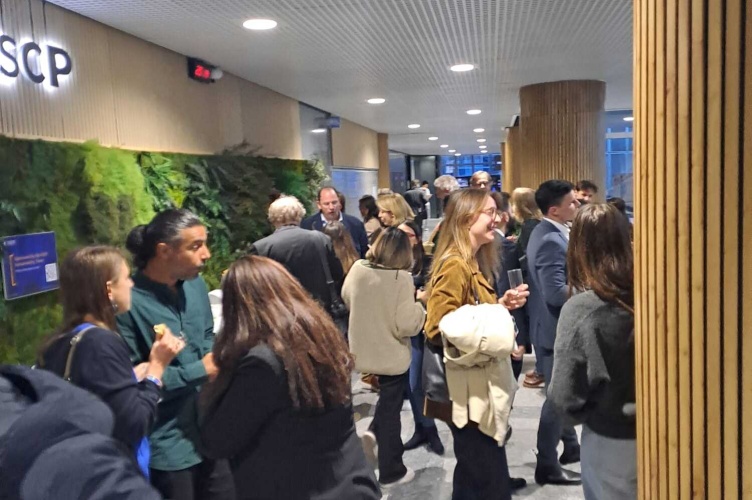
The evening concluded with a speed networking session followed by a cocktail reception. What stood out was the level of engagement: discussions continued well beyond the scheduled close, with participants still exchanging ideas at the school’s doorstep.
This dynamic captured the spirit of the event—open, collaborative and genuinely driven by the desire to connect.
Campuses