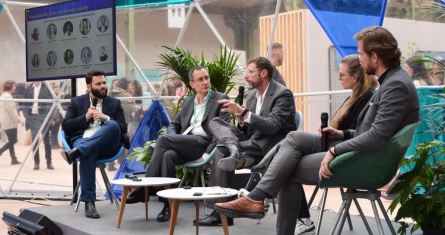
Experts from ESCP’s Sustainability Advisory Council discuss the role of business education in driving systemic change.
Sustainability is no longer a commitment institutions can simply declare. It is something they must be able to demonstrate, measure, and — crucially — have challenged. With the launch of its Sustainability Advisory Council, ESCP took a clear step in that direction: opening its strategy to external scrutiny.
Bringing together 13 international experts from fields ranging from climate science and finance to activism and public policy, the Council is designed to play a role in questioning and strengthening ESCP’s sustainability approach and holding the School accountable.
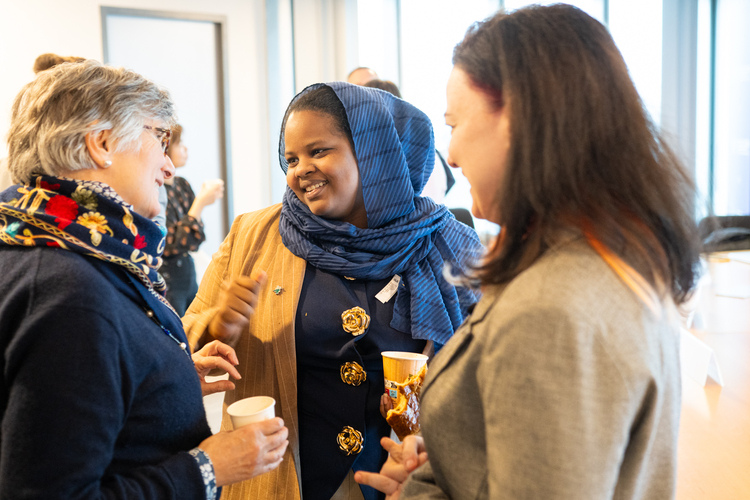
In December 2025, ESCP Business School welcomed several members of the Council to the Paris campus for their first in-person meeting. Over two days, the Council engaged with ESCP’s sustainability strategy, reviewing its approach, challenging its assumptions, and sharing perspectives.
Rethinking the role of business schools
"I think the key imperative is to give everybody who goes through the business school the tools and knowledge, and scientific awareness," shares Alison Taylor, Professor at NYU Stern School of Business.
At the heart of the Council’s discussions is a fundamental idea: business schools are not neutral actors in the sustainability transition. They shape the leaders, organisations, and systems that drive economic activity.
“Knowing that most of the emissions are coming from companies… there’s a big role [for the school],” says Nisreen Elsaim, Former Chair of the UN Secretary-General’s Youth Advisory Group on Climate Change.
This perspective reframes the role of institutions like ESCP. Beyond teaching sustainability, they are responsible for embedding it into how future leaders think, decide, and act.
From awareness to agency
One of the strongest messages emerging from the Council is that sustainability education must go beyond knowledge.
For Hans Stegeman, Chief Economist at Triodos Bank, the priority is agency. “Business schools have a very important role in combating climate change because people need to understand what their own agency is,” he explains. “That’s what we need to learn at a business school because these are the future leaders who need to change the system.”
This implies a shift in how sustainability is taught. Not as a standalone subject, but as a lens applied across disciplines—from finance to strategy to operations. “It is always about the system and how you can change the system,” adds Stegeman. “If you can learn that in the best possible way at a business school, we are prepared for the future.”
It also requires equipping students to operate across multiple levels of change. As Daniel Nowack, Head of Social Innovation at the World Economic Forum, shares: “We need to act on three levels: the system, the organisation, and the personal level.” Addressing sustainability means understanding how these levels interact and where decisions create impact.
For ESCP, where 100% of students already receive sustainability training, this means deepening the approach: ensuring graduates are not only informed, but capable of navigating complexity and making responsible decisions in practice.
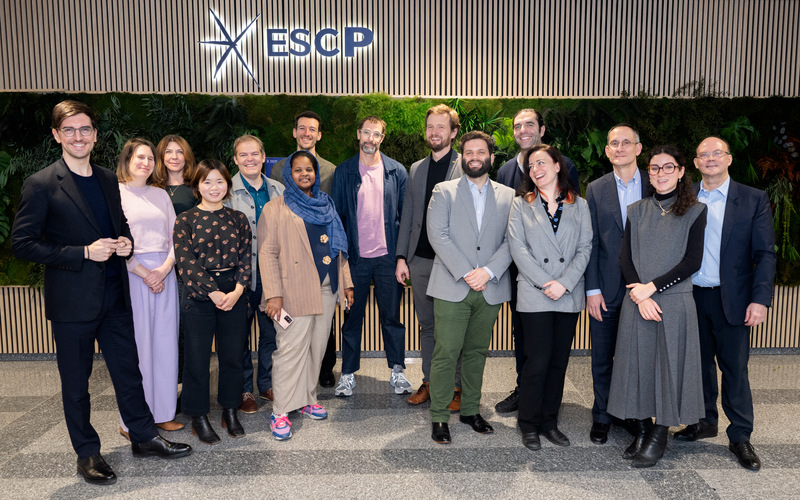 Welcoming members of ESCP's Sustainability Advisory Council
 Sustainability as a leadership capability
The Council also reinforces a clear message about the future of leadership. Sustainability is no longer a niche expertise: it is a core competency.
“The leaders of tomorrow will have to fight climate change and reduce the risk related to climate change,” says Emmanuel Normant, Vice President Sustainable Development at Saint-Gobain. “But also more and more, they will need to know how to adapt to the consequences of climate change.” Leadership, in this context, is as much about resilience and adaptation as it is about mitigation.
At the same time, the expectation is not that every student becomes a technical expert. Taylor highlights a more pragmatic goal. “Every business student needs to have confidence with the topic—to know what they don’t know, and where to find the facts.”
This pragmatic approach reflects the realities of modern leadership: navigating uncertainty, making informed decisions, and balancing competing priorities.
Business schools have a very important role in combating climate change because people need to understand what their own agency is. That’s what we need to learn at a business school because these are the future leaders who need to change the system.
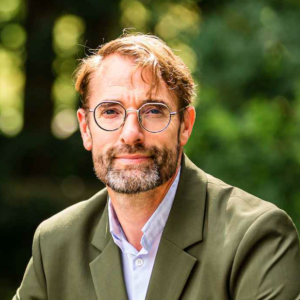 Hans Stegeman
Chief Economist at Triodos Bank
A new model for sustainability in business education
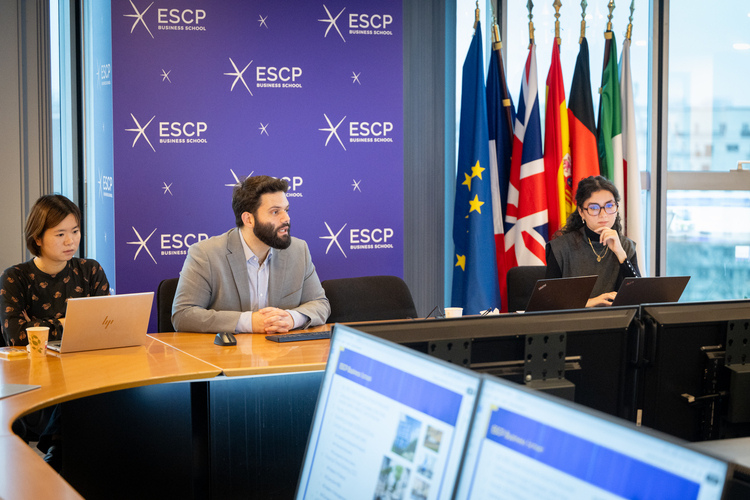 ESCP’s Associate Dean of Sustainability Gorgi Krlev addresses the Council
 The Sustainability Advisory Council signals a move towards a more open, collaborative model of business education—one that recognises that the challenges of sustainability cannot be addressed from within a single discipline or institution.
The Council’s first in-person meeting in Paris marked the beginning of this collaborative work and laid the foundation for a shared roadmap, identifying priorities and areas for action that will shape ESCP’s sustainability strategy in the years ahead.
The ambition is clear: to ensure that sustainability is not an add-on, but a core principle guiding how business is taught, understood, and practised. And to do so with the level of openness and accountability that today’s challenges require.
Relevant link
Campuses