
What does it really take to turn a business idea into a successful scale-up?
Let’s Walk is ESCP Business School’s conversation series where ideas come alive on the move. In this episode, host Anobla heads to London to meet Davide Sola, Professor of Strategy and Entrepreneurship at ESCP, to explore what it takes to turn a promising business idea into a successful scale-up.
Walking from the ESCP London Campus to King's Cross and through the City of London, this episode explores the challenges of entrepreneurship, the difference between growth and scaling, and why human judgement remains essential in an increasingly AI-driven business world.
What does it take to build a successful startup?
For Prof. Sola, entrepreneurship begins with identifying a problem worth solving.
Drawing on his experience as an entrepreneur, consultant, and academic, he explains that every startup must answer three fundamental questions: Is there a problem worth solving? Can we solve it? And can we make money from the solution?
Making money is a consequence. [...] It's not the goal.
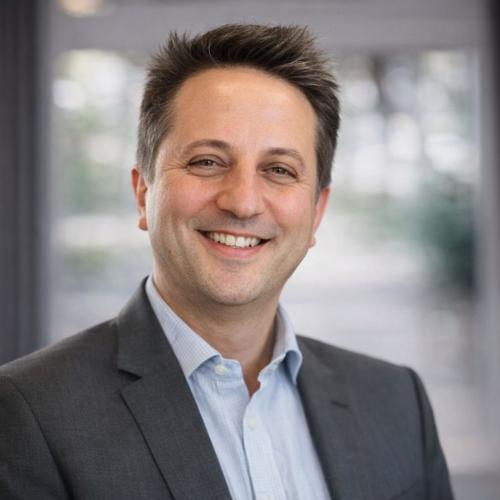 Davide Sola
Professor of Strategy and Entrepreneurship
He identifies three stages of entrepreneurial development: customer-solution fit, product-market fit, and profit-market fit.
While the first two establish whether a solution meets a genuine need and can reach a wider market, the third focuses on building a profitable business model.
From growth to scaling: knowing when to expand
Walking through London's entrepreneurial hubs, Sola highlights how access to capital, international talent, and global markets creates opportunities for startups to expand.
But growing a business and scaling it are different challenges. Using Spotify as an example, he explains that scaling involves delivering the same product or service repeatedly across markets, while growth can require additional resources and complexity.
For entrepreneurs, understanding the size of their potential market and whether their solution can be replicated is essential before expanding.
AI, entrepreneurship, and the importance of human judgement
The conversation also examines how artificial intelligence is transforming entrepreneurship by accelerating processes and making advanced technologies more accessible.
While Sola believes AI will become an increasingly fundamental part of business, he argues that strategic decisions still depend on human judgement, emotion, and the ability to turn ideas into action.
There are some processes like strategy, like entrepreneurship, that are human-centred, with AI in the loop.
Davide SolaProfessor of Strategy and Entrepreneurship
Looking to the future, Sola sees significant opportunities for entrepreneurs willing to address emerging needs. His advice to aspiring founders is to start with customers, test their assumptions, and focus on solving a worthwhile problem before developing a solution.
Watch the full episode and discover all Let’s Walk conversations on the ESCP YouTube channel.
Featuring
Location
📍 ESCP London Campus, London, United Kingdom
Chapters


Campuses