

Polexit has been much discussed – even flirted with – by many commentators and Polish politicians over the last few…
8 March 2022 | 5 minute read
InsightsOn the occasion of the EU summit at Versailles, Jérôme Creel suggests an alternative to deal with the economic consequences of the war in Ukraine and to build a “European defence.”
10 March 2022 | 3 minute read
This article was originally published by Euractiv.
Dominated by the Ukraine crisis, the informal summit of EU heads of state and governments meeting this week in Versailles is likely to see tough discussions on the implementation of a new common debt issue that would operate in a similar way to the Recovery and Resilience Facility (RFF)of the NextGenerationEU (NGEU) programme. This programme was developed to deal with the medium- and long-term consequences of the Covid-19 crisis.
The idea that will probably be discussed in Versailles is to provide EU member states with additional means to deal with the economic consequences of the war in Ukraine – energy, anyone? – and to build a “European defence.”
Beyond the tensions of certain northern European countries over the systematic use of public debt to combat all the ills affecting the European Union, it is perhaps useful to recall two things:
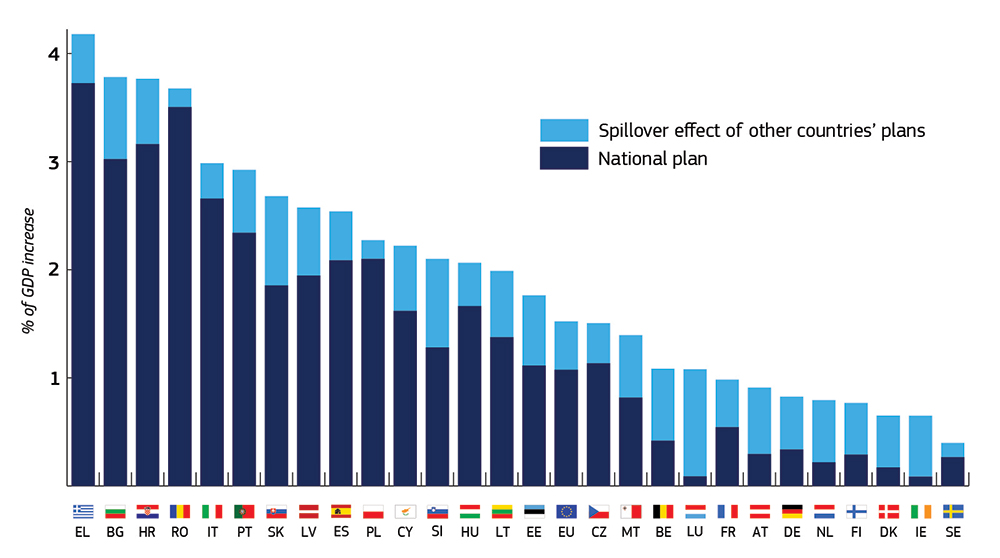
The expected gain from the loans is therefore much less than the expected gain from the transfers… which has as a corollary that of the 360 billion euros foreseen for these loans, a significant fraction may never be mobilised by the Member States.
Why take out a common loan if you can go directly to the financial markets to finance yourself?
The facility exists; it has not yet proved its worth, but Europeans have agreed that it should be implemented.
So rather than considering renewing the NGEU programme – already – by adapting it to new challenges, would it not be possible for the EU to transform the residual loans of the RFF into immediate transfers and grants to Member States?
The facility exists; it has not yet proved its worth, but Europeans have agreed that it should be implemented. Let’s give it every chance to be effective by using it fully and very quickly: there is no shortage of projects to finance!
Polexit has been much discussed – even flirted with – by many commentators and Polish politicians over the last few…
8 March 2022 | 5 minute read
Insights
When Elon Musk appeared via video link on the trading floor of Nasdaq’s MarketSite back in June, moments before ringing…
2 October 2026 | 7 minute read
Insights
What do Alphabet, Meta, Alibaba and Tencent have in common? These global consumer technology giants were all founded outside Europe,…
4 April 2023 | 6 minute read
Insights