

What do Alphabet, Meta, Alibaba and Tencent have in common? These global consumer technology giants were all founded outside Europe,…
4 April 2023 | 6 minute read
InsightsSpaceX’s record IPO made Elon Musk the world's first trillionaire overnight. But according to ESCP Professor Francesco Venuti, Europe’s path to success in this new space race is a very different one.
2 October 2026 | 7 minute read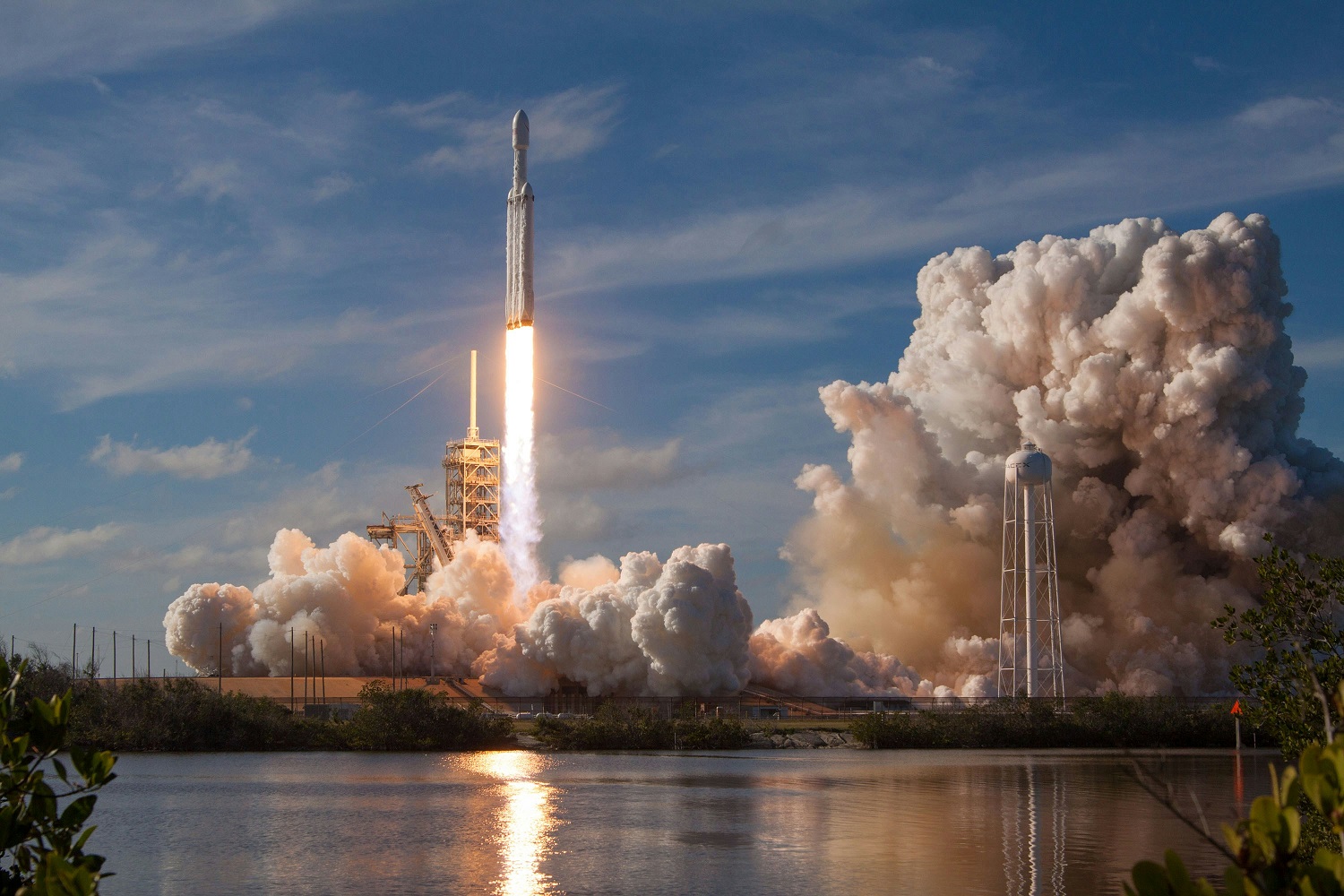
When Elon Musk appeared via video link on the trading floor of Nasdaq’s MarketSite back in June, moments before ringing the opening bell, the world’s richest man struck a triumphant tone. His company, SpaceX, was about to complete the largest IPO in history, raising $75 billion at a $1.77 trillion valuation. By the close of trading, the stock was up 19%, and Musk had crossed a threshold no human had reached before: he became (albeit briefly) the world’s first trillionaire.
“SpaceX,” he told the crowd, “is [about] to take the fiction out of science fiction. We want to be able to take anyone who wants to go to the moon, anyone who wants to go to Mars, or anywhere in the solar system, and maybe beyond the solar system at some point.”
Welcome to the new space economy – a global growth sector that is estimated to be worth $1 trillion by 2030, driven almost exclusively by private companies that are building satellites and running commercial operations in orbit without the need for the government agencies that previously held near complete control over spaceflight.
While SpaceX is undoubtedly leading the way, other US players such as Blue Origin – owned by Amazon founder Jeff Bezos – and United Launch Alliance (ULA) are also making great strides in reusable launch technology, driving what some describe as a second space race.
But while these companies dominate the headlines, Europe’s opportunity in the new space economy lies elsewhere. For ESCP Professor Francesco Venuti, downstream innovation, and Europe’s ability to write the rules, could prove more important than rockets.
“The first space era, in the sixties, seventies and eighties, really was a competition,” Venuti says. “It was between states and it was about supremacy,” with most of the period’s landmark achievements initially accomplished by the USSR, before the US eventually emerged as the leading space power.
“Today we are in a new era, which is more about collaboration among international agencies.” It’s an era, he says, where European businesses are already playing a significant role in the rapidly growing commercial space ecosystem, but they are doing so by relying on US launch infrastructure, rather than building their own.
“When we think about the space economy, we immediately think about rockets, about being first back to the moon,” says Venuti. “But this is only a very minor part of the new space model, although very fascinating and visible especially in the public opinion.”
According to Venuti, the real opportunity – and this is where Europe is already successfully competing – is in what is called the downstream. The space economy, he says, is broadly and traditionally divided into two main macro-categories: the upstream and the downstream. The upstream covers the hardware, infrastructure, and research needed to get into space. The downstream is where space technology creates value back on Earth.
Current applications are in banking, insurance, agriculture, logistics, and telecoms, wherever a business might benefit from satellite data, but the opportunities here are significant, and they will continue to grow. As Venuti points out: “If you think about today, we all already use [downstream] space technology, for example, in our mobile phones.”
The numbers back him up. According to the European Space Agency’s 2026 Report on the Space Economy, upstream was worth around €75 billion in 2025, with 80% of its institutional demand dominated by defence. Downstream, led by satellite navigation and Earth observation, was worth roughly €490 billion: more than six times as much. In other words, the most visible part of the space economy—rockets and launches—is far from its largest commercial opportunity.
Last October, Airbus, Leonardo and Thales signed a memorandum of understanding to merge their satellite businesses into a joint venture reportedly valued around €10 billion, 25,000 employees strong, headquartered in Toulouse. Positioned as Europe’s answer to Starlink, this is one of three innovation clusters that are quietly driving Europe forward in the growing downstream sector.
The other two clusters are in Germany, spread across Munich, Augsburg and Bremen, and in Turin, where you’ll find companies such as Argotec, which began by designing food for the ISS and went on to build, with Lavazza, the first espresso machine sent into orbit, spinning off research into entirely different applications.
Venuti also points to other less glamorous innovators, such as Sabelt, an Italian company from Turin, leader in the production of seat belts for different types of vehicles. Sabelt seat belts are now used aboard Cygnus, the space cargo module built in Turin by Thales Alenia Space to deliver supplies and equipment to the International Space Station. “The original business of Sabelt has nothing to do with space,” he says, “but they’ve been able to adapt their expertise and excellence to catch an opportunity coming from the space economy”.
None of this looks like SpaceX. And that, Venuti argues, is precisely the point.
The future [of Europe] cannot avoid the space economy. It’s not a matter of do we want to be in or not. It’s more what role we want to play.
Does Europe need its own Musk-style visionary? Venuti is unambiguous in his answer. “It would be nice, but I don’t think our game should be played at that level.”
“SpaceX and Elon Musk are a paradox,” he says. “It’s created a huge ecosystem, but it’s very self-centred. Everything is about him. I have a real question mark over what happens to a company like this in the long term, once he’s no longer there.”
Rather than trying to replicate the personality-driven model associated with Musk, Venuti thinks that Europe’s competitive advantage lies in its collective strength – but there are lessons that can be learned from geopolitical competitors.
He points to the lack of red tape and regulation in the US, giving American businesses an edge. Europe, in comparison, has historically been more cautious.
Similarly, he believes there is still an awareness gap in European businesses and in the funding structure. “In Europe, our managers are traditionally more conservative. Many don’t realise they’re already part of the downstream model,” he says. Policy, in his view, has focused too much on funding invention and not enough on stimulating adoption of downstream opportunities: training, tax incentives, financial opportunities, support that helps ordinary companies actually recognise the value of space-derived data.
So how can Europe supercharge its development? For policymakers in Brussels, the EU Space Act is the solution. Unveiled in June 2025 by the European Commission, the proposal, which is due to come into force in 2030, seeks to establish a single legal framework across the EU, increasing the competitiveness of the European space industry by streamlining fragmented laws around safety and sustainability and fostering job creation in the process.
“It’s definitely a signal, a strong push,” says Venuti, “but I’m not sure it’s realistic to impose a single standard by rule alone.”
The bigger opportunity, he says, goes further than any regulation. Outer space is still a legal frontier: property rights in space remain unresolved (international law holds that celestial bodies belong to “mankind” collectively), and questions of orbital debris, insurance, and cross-border liability are multiplying fast.
This is where Europe can really take a leadership role – by playing to its strengths as a rule maker.
“Europe has a long historical tradition in law, regulation, and insurance,” Venuti says. “Insurance itself was born in the Mediterranean. Roman law and common law both developed here.” He sees an opening for Europe to become the aggregator of a new generation of international agreements governing space, the way the US built decades of quiet influence through the UN, IMF and WTO.
“Europe may have an additional opportunity to turn one of its traditional weaknesses into a competitive advantage. Its regulatory culture — often criticised for producing excessive bureaucracy, rules and constraints — has also developed a unique expertise in setting standards. In the emerging space economy, Europe could leverage this regulatory DNA to become a global convenor and standard-setter for space governance. Whether it can play this role in an increasingly fragmented geopolitical landscape, however, remains an open question.”
“The future [of Europe] cannot avoid the space economy,” he says, describing it as essential. “It’s not a matter of do we want to be in or not. It’s more what role we want to play.”
What do Alphabet, Meta, Alibaba and Tencent have in common? These global consumer technology giants were all founded outside Europe,…
4 April 2023 | 6 minute read
Insights
The European Commission proposed new rules on who can use and access data generated in the EU. Jointly, these new rules…
31 March 2022 | 6 minute read
Insights
The Italian entrepreneurship environment, since the Renaissance, has been made up of family companies, large and small, which represent most…
29 March 2022 | 5 minute read
Insights