


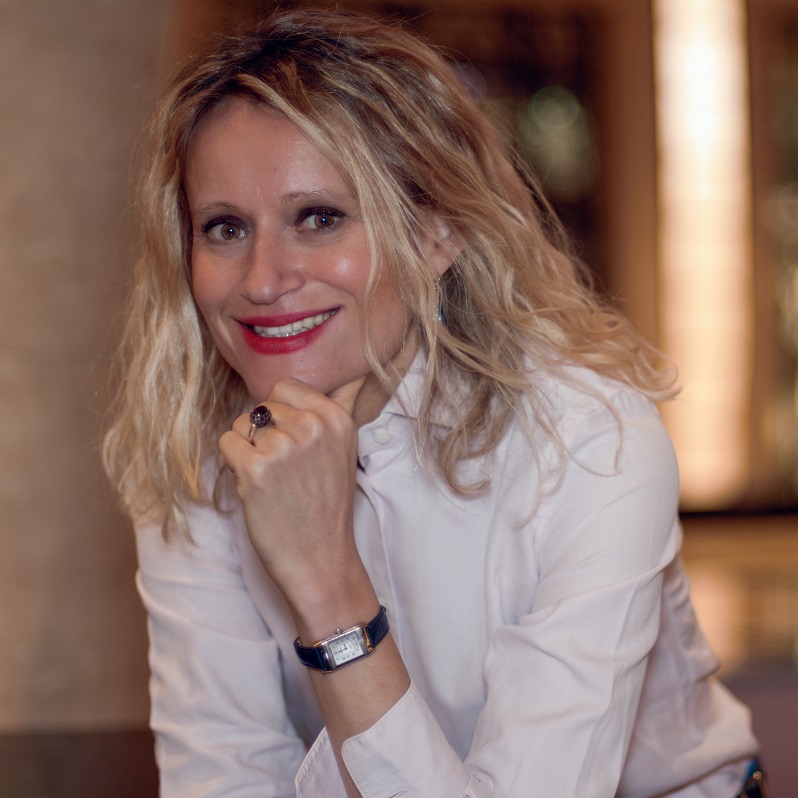
As roles merge and industries overlap, value is shifting from specialisation to connection. Philosopher Gabrielle Halpern explains why hybridisation is becoming central to how companies operate.
If companies are built around specialised functions – finance, HR, operations – what happens when value comes from combining them?
Philosopher Gabrielle Halpern argues that “hybridisation” – bringing together roles, sectors and skills that do not usually interact – is starting to alter how companies operate, innovate and organise work.
“Hybridisation is the art of making improbable marriages,” she says, having worked in the French government and advised companies on how to respond to complex, overlapping challenges.
In practice, that often means combining things that do not naturally fit – sectors, professions and functions – to create something new. “Hybridisation is a reciprocal metamorphosis,” she says. For companies, that means value is no longer created within functions, but between them.
Hybridisation is the art of making improbable marriages.

Roles start to merge
This is already happening to an extent. In companies across industries, silos are breaking down. Finance is moving closer to sustainability, while HR is increasingly tied to real estate as companies rethink offices and working patterns. “Before, the CFO and the CSR director were working independently…now their missions are converging,” Halpern says.
She argues this is not a series of isolated trends or coincidences. It reflects the pressure to deal with climate, social and economic constraints at the same time. Many companies respond to these competing demands by pushing more collaboration between teams. But she says that does not go far enough.
“It is not just a question of transversality and collaboration: because with transversality or collaboration, you go back to what you were before the common action,” says Halpern. With collaboration, people go back to their roles. With hybridisation, those roles start to change.
Innovation at the edges
So does innovation. New ideas are increasingly coming from industries that previously had little connection. “We’re seeing surprising links between sectors that seemed to have nothing to do with each other,” Halpern says.
She points to car manufacturers moving into healthcare, and real estate developers adapting housing for ageing populations. In each case, innovation comes from bringing together things that “seem very different” to “create something completely new”, she says.
That shift is also changing how companies organise work. “Hybrid” has come to mean working partly remotely. Halpern rejects that definition, and offers a new one: “Hybrid work is how you manage to create real meetings between people, between departments, between professions,” she says.
The focus is not where people work, but whether they connect. Physical proximity does not guarantee exchange, and neither does digital connectivity.
Breaking out of silos
The main obstacle is how companies are structured. “Our society is dying from the silos that divide us… from the boxes we confine others to and ourselves within,” Halpern says. Those “boxes” are everywhere – in job titles, departments and industries. They help organise work, but they also limit it, breaking problems apart and missing how they fit together.
That worked in a more stable environment. It no longer does. “If we consider the world with categorical thinking, we won’t be able to deal with those crises and transitions,” she says. Hybridisation is how companies deal with that, and it changes what they need from their people.
You can’t put a label on a hybrid person… and there’s nothing more frightening than when we can’t categorise.


Becoming a “centaur”
To describe the kind of employee companies now need, Halpern uses the image of the centaur. “The centaur… symbolises perfectly the question of hybridisation,” she says.
Half-human, half-horse, it represents what happens when categories are crossed – and why that is uncomfortable. “You can’t put a label on a hybrid person… and there’s nothing more frightening than when we can’t categorise,” she says.
That discomfort is the point. Companies need people who can move across roles and functions.
“To hybridise company employees, you have to help them to come out of their professional identity,” she says. That means understanding how other roles work. “The idea is not to encroach on the territory of the other but to be able to understand the other,” she says.
For business leaders and students, this means changing how they work. “Hybridisation is first and foremost the simple idea of curiosity,” Halpern says. It means stepping outside your role and engaging with other functions.
It also requires humility. “We can only build bridges between worlds when we have learned to have a foot in several worlds,” she says. And that is a necessity. “Being a centaur is not a luxury reserved for a select few; each of us has the responsibility to become one,” she adds.