

In this Salon Debate, Louis-David Benyayer, Associate Professor of Digital Transformation and AI Initiatives Coordinator at ESCP, and Professor Marie…
25 June 2026 | 6 minute read
The SalonUnderstanding executives’ individual decision-making styles can help companies improve the use of AI in strategic initiatives and overcome flaws in human judgement, according to Christoph Keding and Philip Meissner.
20 September 2022 | 5 minute read
Spurred by Covid-19, the adoption of artificial intelligence (AI) recently skyrocketed. Numerous examples show that the use of AI now transcends mere process automation and is increasingly being used to augment decision-making processes at all levels – including top management.
“Artificial intelligence for both strategic decision-making (capital allocation) and operating decision-making will come to be an essential competitive advantage, just like electricity was in the industrial revolution or enterprise resource planning software (ERP) was in the information age,” write Barry Libert, Megan Beck, and Mark Bonchek in the MIT Sloan Management Review.
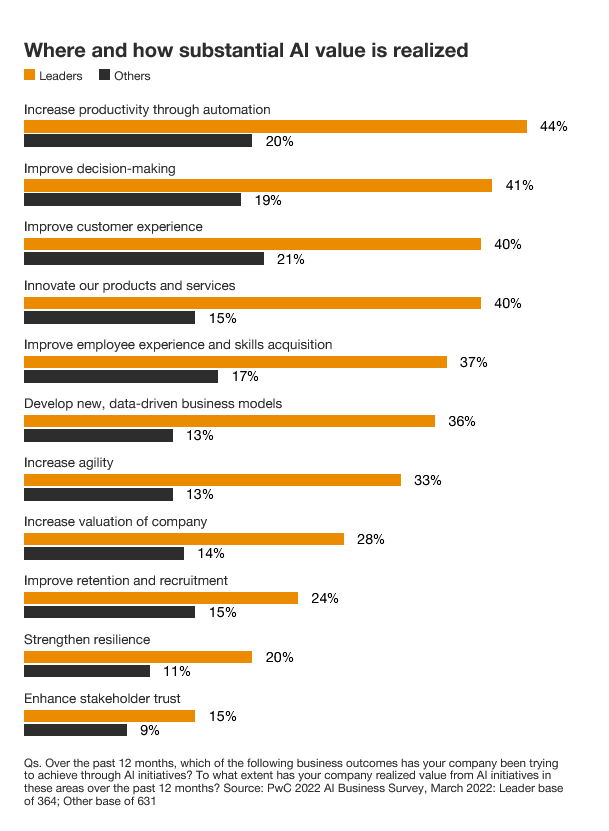
In AI-augmented decision processes, where algorithms provide suggestions and information, executives still have the final say. For example, a special, unreleased version of Salesforce’s own AI program, called Einstein, has helped to significantly reduce bias in staff meetings and decrease discussions driven by political or personal agendas among members of the top management team.
Our research picked up by the MIT Sloan Management Review reveals that this human filter makes all the difference in organizations’ AI-based decisions. We show that there is no single universal human response to AI, and that individuals make completely different choices based on identical AI inputs.
If we do not recognise the human dimension, we will only understand half the equation when it comes to optimising the interplay between AI and human judgment.
ESCP Business School Professor and European Center for Digital Competitiveness co-founder and director Philip Meissner

Our analysis finds that these differences in AI-based decision-making have a direct financial effect on organisations. Depending on their particular decision-making style, some executives invest up to 18% more in important strategic initiatives based on the exact same AI advice.
To champion AI in the boardroom, leaders must acknowledge human biases and decision-making styles. If we do not recognise the human dimension, we will only understand half the equation when it comes to optimising the interplay between AI and human judgment.
Our findings suggest that executives using AI to make strategic decisions fall into three archetypes based on their individual decision-making styles:

In the era of AI-enabled decision-making, people don’t change their decision-making styles.
ESCP Business School lecturer and PhD graduate Christoph Keding
These different decision-making archetypes show that the quality of the AI recommendation itself, and how executives make sense of and act on this advice, is equally important in assessing the quality of AI-based decision-making in organizations.
What’s interesting is that people show the same behavioural patterns whether or not AI is involved. In the era of AI-enabled decision-making, people don’t change their decision-making styles.
In the MIT Sloan Management Review , we provide three recommendations for boards of directors and senior executives to successfully integrate AI into strategic decision-making processes:
To utilize AI’s full potential, companies need a human-centred approach to address the cognitive dimension of human-machine interactions beyond automation. With the right balance of analytics and experience, AI-augmented decision processes can increase the quality of an organization’s most critical choices, and drive tremendous value for companies in an increasingly complex world.
In this Salon Debate, Louis-David Benyayer, Associate Professor of Digital Transformation and AI Initiatives Coordinator at ESCP, and Professor Marie…
25 June 2026 | 6 minute read
The Salon
OpenAI, the creator of ChatGPT, is gearing up to launch its Initial Public Offerings (IPO) this year. This financial manoeuvre would represent…
5 May 2026 | 8 minute read
Insights
The European Union set out to make itself the global home of “trustworthy AI”, building the world’s first comprehensive rulebook…
26 March 2026 | 5 minute read
Insights