

What drives someone to spend €120 on a bottle of perfume, the scent or the story behind it? In recent…
2 October 2025 | 5 minute read
The SalonMichael Haenlein and his co-authors explain why Gen Z’s media consumption patterns have given rise to an industry that is here to stay, and what companies should do about it.
28 March 2022 | 7 minute read
Many marketing managers still have a less than adequate understanding of social media platforms such as Instagram or TikTok, and often find it hard to make the right decision in this fast-moving environment. To provide some guidance in this respect, we wrote an article published by the California Management Review which aimed to give an introduction to the most critical platforms for influencer marketing (it even included a beginner’s guide to Instagram and TikTok) and presented advice to firms who want to engage in influencer marketing, as well as specific questions on identifying the right influencers to collaborate with.
Getting a marketing message out to your younger customers is a challenging task even in the best of times. But the media consumption patterns of Generation Z are fundamentally different from the ones seen in older ones. Instead of watching TV, ‘zoomers’ watch streaming services such as Netflix. Instead of listening to the radio, they listen to Spotify. And instead of reading magazines, they rely on Reddit.
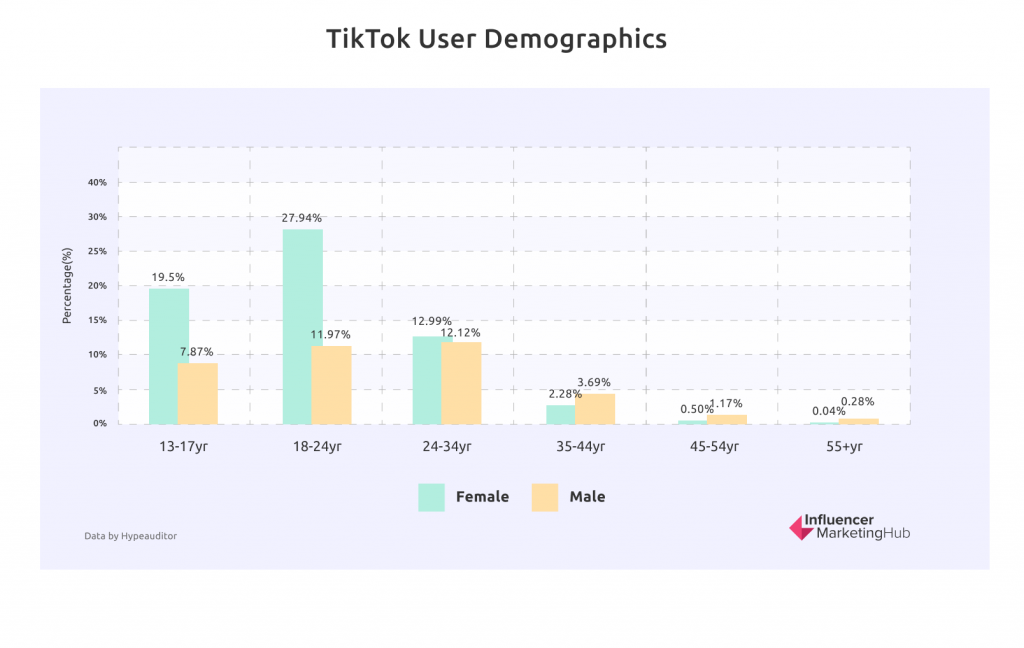
This has given rise to two main marketing channels: outdoor advertising such as billboards and mobile advertising, specifically on social media platforms such as Instagram or TikTok. This shift, as well as sites such as Snapchat or Twitch, have generated an entire industry of social media influencers and influencer marketing agencies.
In our article, we explain that influencer marketing can be hugely successful when done correctly, but that it can also be very damaging when conducted in the wrong way: (from Kim Kardashian promoting pregnancy sickness drug Diclegis to Billy McFarland promoting a fake musical festival on an island in the Bahamas). Although the Federal Trade Commission (FTC) has developed detailed guidelines, only about 14% of influencers are compliant with those rules and the first lawsuits have emerged in this context, against gambling platform CSGO Lotto for example.
Despite its increasing popularity, influencer marketing is still an activity with which the average Chief Marketing Officer is either unfamiliar or, at least, less familiar than with more traditional forms of communication. As a result, it is still too often outsourced to younger staff, interns, or external agencies.
After looking into social media platforms, in general, to shed light on the issue of why Instagram and TikTok are, to some extent, more important today than Facebook, Twitter, or YouTube, we offer eight pieces of advice for firms engaging in influencer marketing. We focus on general advice as well as specific questions related to choosing the right influencer.
Companies must realize that influencer marketing platforms have their own culture, language, idioms, and styles and that those need to be reflected in their content. This platform-specific user culture has at least three implications for companies who want to engage in Instagram or TikTok:
Influencer marketing needs to be integrated into a larger marketing plan, especially since research has shown that there are strong interaction effects between influencer marketing, advertising, and sales promotions. Such integration affects influencer marketing in three ways:
There is, unfortunately, no straightforward answer to the question of whether large influencers should be preferred over small ones or vice versa. Instead, three factors need to be considered:
Marketing managers have the understandable desire to control tightly any form of communication about their brands, be it within the social media space or outside of it. Nevertheless, in the case of Instagram and TikTok too much control is more often a bad than a good thing, for the following three reasons:
All the while, you really should assure brand safety and legal compliance by following the following three steps:
Arguably the most critical decision in any influencer marketing campaign is to identify the right influencers to work with – those who can provide content consistent with your brand objectives. While choosing the right communication channel is essential for any form of advertising, the interpersonal relationship between influencers and their followers makes this choice particularly essential in influencer marketing. In this section, we want to focus on four key questions that can help firms to identify the right influencers to work with.
Identifying influencers, especially in their early stage, is often as much an art as a science. Agencies regularly scout social media to find those hidden gems that have not been discovered before.
It is vital to identify those influencers who are in the industry for the long game and who are willing to put in the effort required. Nothing can be more frustrating than having to work with an influencer who lacks the necessary professionalism or to start a collaboration that is supposed to be long term just to realize that the influencer drops out after a short period.
Users are unlikely to follow a person simply because they want them to. Instead, it is those influencers who find a topic they are genuinely and authentically passionate about who are achieving growth. The most successful influencers have been influential even before entering social media.
Good content alone is unlikely sufficient to reach a broad audience. Therefore, companies should identify influencers who are present on more than one platform to broaden their reach, decrease their dependency on a single platform, and to leverage the possibilities of alternative formats.
Strategies that used to work for firms a year ago may no longer be effective today. In our article, we focused on four fundamental changes that will likely be of high importance in the short- and medium-term: changes due to the strategic behaviour of platform owners; changes due to the authentic self-presentation of influencers; changes due to Covid-19; changes due to regulation. However, we are confident that the advice given above will be of relevance for some time.
What drives someone to spend €120 on a bottle of perfume, the scent or the story behind it? In recent…
2 October 2025 | 5 minute read
The Salon
Human Leadership & Transformation
Winning hearts, not just games: the power of emotion in sports marketingIn sports marketing, success often hinges on emotion. Whether it’s the excitement of a last-minute goal, or the pride in…
29 August 2024 | 5 minute read
Executive Playbook
It feels like everyone is making a podcast these days, including brands, but are they doing so successfully? We have…
27 April 2022 | 9 minute read
Executive Playbook