

When we talk about digital transformation, we often focus on technology—faster software, smarter algorithms, or more efficient platforms. But for…
13 February 2025 | 5 minute read
InsightsEven if it has been affected in an unprecedented way by the Covid-19 crisis, the industrial sector has shown a remarkable ability to adapt, explains professor Géraldine Galindo.
9 September 2021 | 6 minute read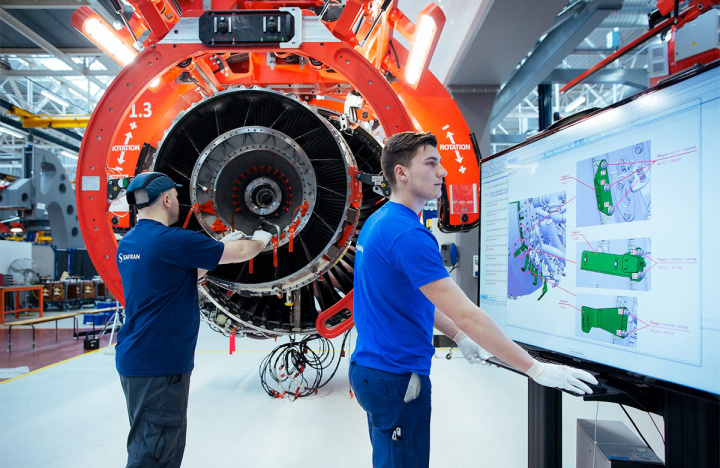
In early April 2020, French tyre giant Michelin announced that it would be starting to manufacture masks. No, the masks weren’t cut from grooved rubber! The prototype was designed in partnership with the CEA (french Atomic Energy Commission) and developed and tested in just a few weeks, with the support of specialised SMEs, before rolling out full-scale production. In the space of a few days, sewing machines replaced big machinery for many workers serving as volunteers. Another plant that reorganised itself in a short space of time to make up for an urgent shortage was Givenchy (LVMH), which set about producing hydroalcoholic gel.
These are but two examples of how responsive the industrial sector can be. They are symbols of need, but also of the concrete implementation of solutions to the health crisis. I believe that industry may be better equipped than other sectors to emerge from the crisis. Of course, the sector was also seen as a worrying barometer of the health crisis, as successive plant closures marked the inexorable progress of the pandemic. In addition, the shutdowns of chinese factories highlighted the severe reliance on producers of raw materials for its medicines. However, the industrial sector has two key assets for the post-crisis period:
Many industrialists were already familiar with managing plant shutdowns, activity slowdowns and reorganisations, etc.
What crisis? It’s just business as usual (or almost) for industry! Relocation, de-industrialisation, de-structuring and other difficult buzzwords have already forced many companies to question their models, think of a new division of labour and constantly face up to increased competition and economic, environmental and social uncertainties. Many industrialists were already familiar with managing plant shutdowns, activity slowdowns and reorganisations, etc. Admittedly, the current crisis is on an unprecedented scale, but industrial players already have practices and mechanisms to guide them and are therefore one step ahead of other, more protected sectors.
Another aspect of the sector’s preparedness for the post-Covid era is digital transformation. For years, industrial companies have had no other choice than to digitalise their production systems and move to the so-called “Industry 4.0” to remain competitive. This new industrial revolution is driven by tools such as robots, connected systems using artificial intelligence, etc., which of course implies thinking about security and data processing. While the current crisis is leading to the acceleration of these processes or their roll-out in other areas of corporate activity (e.g. teleworking for support functions), once again, industry is ahead of the game. What’s more, major players have already begun to organise themselves collectively.
This preparation of the sector is based on one factor: people as a key resource.
If people are so central to post-crisis preparedness in industry, how can these key resources be managed? The sector was already engaged in crucial reflections on how to value and deploy human resources. The digital transformations already underway are inextricably linked with questions about work methods and workplaces, forms of organisation and the skills required to support these changes.

Source: McKinsey, “Building the vital skills for the future of work in operations”. 2020.
using currently demonstrated technologies.
58%
AUTOMATED
of the worldwide work activities in manufacturing could be
47
HIGH RISK OF AUTOMATION
%
of jobs in the
United States are at
Source: Frey and Osborne, “The future of employment: how susceptible are jobs to computerisation?”. 2013.
Source: World Economic Forum, “The Future of Jobs Report”. 2018.
in their field.
25
CREATE NEW
JOBS
%
of companies anticipate that automation will
Explain
Workers are central to these challenges, both in terms of preserving their health and their activity; they are therefore a key resource that is central to the changes needed to emerge from the global crisis, a resource whose management must be rethought. And although industrial companies, or at least some of them, have already asked themselves the right questions, it is now time for all of them to do so.
This article is based on the impact paper Géraldine Galindo wrote as part of ESCP Business School’s “Managing a Post-Covid19 Era” series.
When we talk about digital transformation, we often focus on technology—faster software, smarter algorithms, or more efficient platforms. But for…
13 February 2025 | 5 minute read
Insights
Casual chats by the coffee machine or impromptu hallway conversations used to be a big part of what made workplaces…
25 September 2024 | 5 minute read
Executive Playbook
Human Leadership & Transformation
Future of fashion: transforming challenges into opportunitiesIn the beloved film Devil Wears Prada, Andrea Sachs’s friend, Doug, educates her on the true purpose of fashion: “Fashion…
6 May 2022 | 7 minute read
The Salon