

With remote work no longer a nice-to-have but a requirement in the new normal, do people still believe in the…
29 November 2021 | 7 minute read
InsightsSustainability & Responsible Business
Bringing biodiversity and nature into the workplace, a win-win for the environment and employee well-being.
29 January 2021 | 5 minute read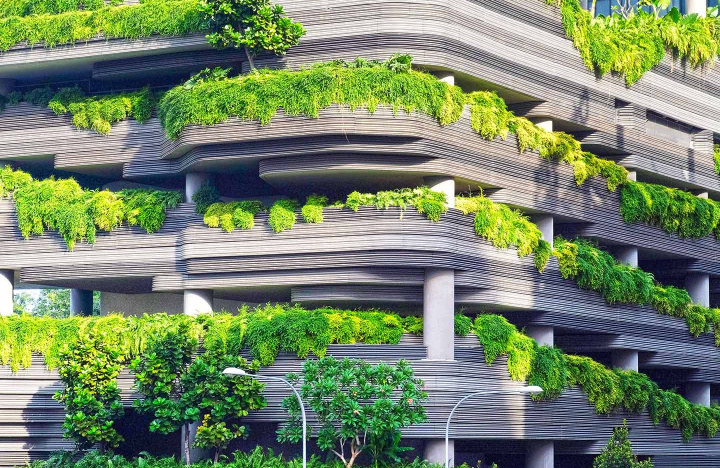
Biodiversity characterizes animal and vegetal species; their multiple and crossed interactions; their physico-chemical relations; their natural environments which are also ecosystems, such as forests, wetlands, and moorlands; and even us, Homo sapiens!
This word, borrowed from the American psychoanalyst Erich Fromm, was defined in 1984 by the biologist Edward O. Wilson. According to him, our instinctive affinity for life unites the human species with all living things. Indeed, we, as an inherent component of biodiversity, have always evolved with it. Our survival is directly linked to the services that nature renders free of charge, also called ecosystem services.
Today, three-quarters of the French population lives in cities. Our relationship with nature has changed dramatically, to the point where its absence from everyday life may reveal a real need. The reverse also applies. It is common to feel a sense of wellness in the presence of nature: a walk in the forest, a view of a garden, the smallest green living space can brighten us up and stimulate, even unconsciously, our mind.
Indeed, numerous studies have demonstrated that the presence of nature, however slight, may: decrease stress; lower the risk of disease; increase productivity and improve creativity. It is clear that fostering biodiversity in the urban environment would be a benefit for both nature and humans.
In 2021, the International Union for Conservation of Nature (IUCN) World Congress is scheduled to take place in Marseille, France, followed by the COP 15 on biological diversity in China.
The effort to preserve biodiversity is indispensable: 75% of terrestrial environments and 66% of marine environments are degraded by human activities on a global scale; nearly 25% birds and 47% of all flightless land-based animals are threatened with extinction; 1 million species are on the verge of extinction in a few decades. The 5th edition of the Global Biodiversity Outlook confirmed that the 20 major international biodiversity targets set in 2010 in Aïchi (Strategic Plan 2011-2020 resulting from COP10 in 2010) have not been met in 2020.
Actions to preserve biodiversity are not just for experts. Civil society in the broadest sense, and specifically businesses, must address these issues that concern us all. It is essential to take a real “step back” in the deployment of projects to reflect on the development of a culture that prioritizes positive impact and deep ecological awareness. This involves making innovative and bold strategic and managerial choices as well as raising awareness and training teams in subjects related to the preservation of biodiversity.
Experience shows that initiatives in this area are very positively received by employees, who are often also the driving force behind them. In a more pragmatic way, the support of an ecological expert or biodiversity consultant prior to a real estate development project often makes it possible to identify potential pitfalls and areas requiring attention, beyond regulatory obligations. It also supports the construction of a project in tune with the concepts of biophilia.
If you would like to know more about biodiversity integration in building design and construction, the Wild-Trees company, in partnership with the Observatoire de l’Immobilier Durable and with the support of ADEME, has created a MOOC Building and Biodiversity (in French), which will start on April 27, 2021. Registrations will open on March 15.

An ecologist with a degree from Pierre and Marie Curie University (Paris VI) and an MBA in CSR Management from ISEADD Business School, Kelly has 10 years of experience in ecology, notably acquired in conservation programmes in France and abroad, such as at the IRD or the Aspinall Foundation. Today, Kelly is an ecology project manager at Wild-Trees.
Trained as a geographer, Marie acquired her expertise in biodiversity through professional experience and her Master 2 Bioterre (Biodiversity and Territory) degree at the University of Paris 1 – La Sorbonne. Marie now puts it to use in the projects she works on as Biodiversity Project Manager at Wild-Trees.
Feature photo by 贝莉儿 DANIST on Unsplash.
With remote work no longer a nice-to-have but a requirement in the new normal, do people still believe in the…
29 November 2021 | 7 minute read
Insights
Human Leadership & Transformation
When was the last time you charged your batteries?As the workplace is increasingly digitised, we need to be aware of the effects on our cognitive abilities and levels…
13 October 2021 | 6 minute read
Executive Playbook
Human Leadership & Transformation
Taxi rides go a long way towards explaining the overwork cultureFinance is considered to be one of the most stressful industries to work in. Pressure to deliver consistently compelling results…
16 April 2021 | 4 minute read
Insights