
At a time when decarbonisation is often reduced to targets and technologies, the real challenge lies in rethinking the system as a whole. How do we move beyond isolated solutions and towards an energy model that is circular, resilient and economically viable?
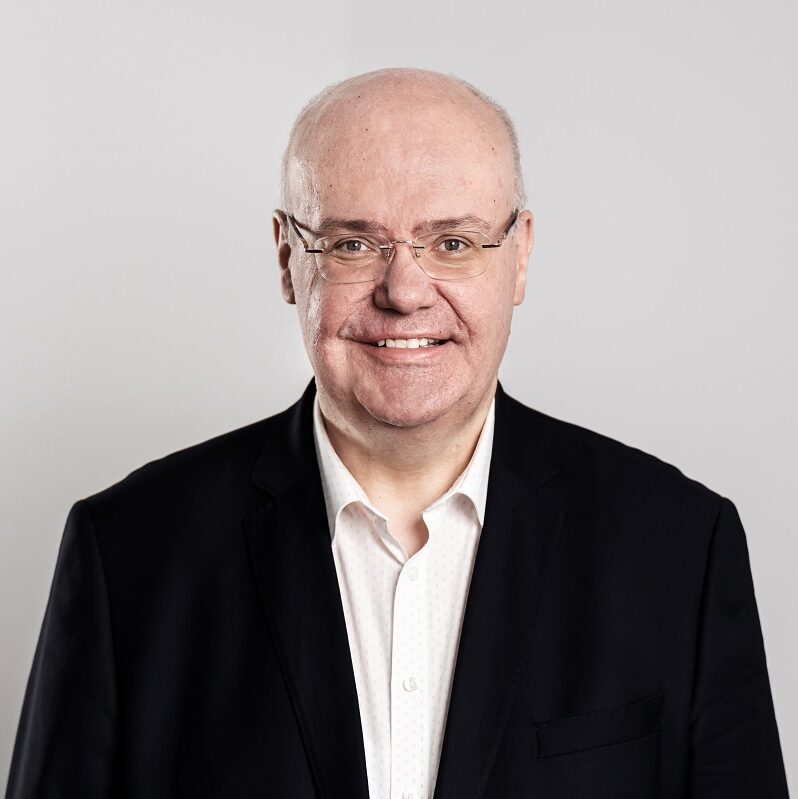
CEO of ENGIE Deutschland
Following a joint study on the circular economy, ENGIE Deutschland and the ESCP Berlin Campus hosted a STARbowl event on 12 February 2026. The evening brought together academia, business and practice – and focused on one central question: How can an international energy company define a credible pathway to decarbonisation?
Eric Stab, CEO of ENGIE Deutschland, shares his perspective on investment decisions, system logic, and why the energy transition can only succeed if we keep the bigger picture in mind.
Mr Stab, ENGIE Deutschland worked with the ESCP Berlin Campus on a circular economy project last year. Why is this collaboration important to you?
Because the energy transition cannot be delivered by individual players acting in isolation. Engaging with a leading business school such as ESCP introduces different perspectives – economic, academic, societal and sometimes deliberately challenging ones. The circular economy is a strong example of this. It forces us to think of energy, resources and infrastructure as one integrated system. That is exactly what is required if we want to fundamentally transform the energy system, rather than merely adjusting individual levers. For us, the circular economy is indeed a major lever of growth and an indisputable business opportunity to be activated in our business models.
This collaboration culminated in the jointly hosted STARbowl Event by ENGIE and ESCP. The key question there was how an international energy company can pursue a credible decarbonisation pathway. What does credibility mean for ENGIE?
Credibility begins when targets are not confined to presentation slides but actively shape decisions. For ENGIE, this is very concrete: our Net Zero 2045 ambition directly guides where we invest – and where we divest. We are systematically reallocating capital away from fossil activities and into renewable energies, storage solutions and green gases. Sustainability is not an add-on for us; it defines how we operate and how we develop our portfolio.
How do you ensure that decarbonisation is not approached too narrowly?
If we focus exclusively on CO2, we miss the point. A successful energy transition must be secure and affordable at the same time. People and businesses need to rely on energy being available and not becoming a luxury good. Only then will the transformation remain socially sustainable. That is why we consistently view sustainability through a threefold lens: climate protection, security of supply and economic viability.
You refer to an “alliance between electrons and molecules”. What do you mean by that?
A climate-neutral energy system will not function on electricity alone. Renewable power is essential, but it is not sufficient by itself. We also need molecules – renewable and climate-neutral gases – to ensure system stability, flexibility and affordability.
Electric solutions are particularly efficient wherever energy can be used directly. Molecules, by contrast, can be stored, transported and deployed flexibly over time. They play a critical role in industrial processes, peak demand, heating, and as a safeguard in an energy system that is increasingly weather-dependent.
In Germany in particular, there is an additional factor: around 600,000 kilometres of gas networks and more than 20 million of connected households and industrial facilities. Simply abandoning this infrastructure would be neither economically nor environmentally responsible. The alliance between electrons and molecules, therefore, means intelligently transforming existing networks and decarbonising them step by step, rather than turning them into stranded assets.
Renewable energies are competitive, and many solutions are already available. The task now is to remain consistent – with pragmatism, a sense of responsibility and a clear focus on the overall system.
What role does biomethane play in this context?
Biomethane is available today and can deliver immediate impact. It is produced from agricultural residues, organic waste or sewage sludge and upgraded to methane quality. For customers, nothing changes – for the climate, the impact is significant.
According to various studies, Germany’s technically feasible biomethane potential is estimated at around 150 to 200 terawatt-hours per year. Currently, we are using only about ten terawatt-hours. This highlights the substantial untapped potential – particularly for heating, industry and flexible power generation.
Biomethane is not an alternative to electrification, but a meaningful complement. It allows households and companies to continue using existing assets while significantly reducing CO₂ emissions. At the same time, it serves as a bridging solution on the path towards other green gases such as hydrogen and e-methane. What matters most is a reliable regulatory framework that enables investment and is fair to all stakeholders – from farmers and network operators to energy companies.
The rapidly growing energy demand of data centres poses new challenges for the energy system. What does this example illustrate particularly clearly?
Data centres are a reality check for the energy transition. They represent strong growth, very high electricity consumption and, at the same time, extremely demanding requirements in terms of supply security. A data centre simply cannot afford even a brief interruption in power supply.
This underlines the fact that decarbonisation must always be approached systemically. Expanding generation alone is not enough. Networks, storage, flexibility and redundancy must be developed in parallel. The real challenge lies in enabling growth without overstretching the energy system.
At the same time, data centres also offer opportunities. One example is the use of waste heat for district heating networks or residential areas. If this energy is not allowed to dissipate unused but is fed back into the system, a major electricity consumer can become a contributor to greater overall efficiency.
How does ENGIE specifically contribute to supplying data centres with green electricity?
One of the key levers is long-term Power Purchase Agreements, or PPAs. They enable new renewable generation to be developed specifically for large consumers – directly, transparently and with long-term planning certainty.
A case in point is our collaboration with Google in Germany. ENGIE acts as Carbon-Free Energy Manager, combining renewable generation from wind and solar with storage and flexibility solutions. The objective is to match the electricity demand of Google’s German sites with renewable energy on an hourly basis as closely as possible. Today, these sites operate with around 85 percent carbon-free electricity, with a clear trajectory to significantly higher levels.
Such models demonstrate that decarbonisation and growth are not mutually exclusive. PPAs provide investment security for new assets while enabling companies to meet their climate targets in a credible way.
Despite geopolitical uncertainties and societal debates, sustainability is under pressure internationally. Why is it still the right course to stay the course?
Because inaction would ultimately be more costly. From both a technological and economic perspective, we are far more advanced today than we were ten years ago. Renewable energies are competitive, and many solutions are already available. The task now is to remain consistent – with pragmatism, a sense of responsibility and a clear focus on the overall system.

License and Republishing

The Choice - Republishing rules
We publish under a Creative Commons license with the following characteristics Attribution/Sharealike.
- You may not make any changes to the articles published on our site, except for dates, locations (according to the news, if necessary), and your editorial policy. The content must be reproduced and represented by the licensee as published by The Choice, without any cuts, additions, insertions, reductions, alterations or any other modifications.If changes are planned in the text, they must be made in agreement with the author before publication.
- Please make sure to cite the authors of the articles, ideally at the beginning of your republication.
- It is mandatory to cite The Choice and include a link to its homepage or the URL of thearticle. Insertion of The Choice’s logo is highly recommended.
- The sale of our articles in a separate way, in their entirety or in extracts, is not allowed , but you can publish them on pages including advertisements.
- Please request permission before republishing any of the images or pictures contained in our articles. Some of them are not available for republishing without authorization and payment. Please check the terms available in the image caption. However, it is possible to remove images or pictures used by The Choice or replace them with your own.
- Systematic and/or complete republication of the articles and content available on The Choice is prohibited.
- Republishing The Choice articles on a site whose access is entirely available by payment or by subscription is prohibited.
- For websites where access to digital content is restricted by a paywall, republication of The Choice articles, in their entirety, must be on the open access portion of those sites.
- The Choice reserves the right to enter into separate written agreements for the republication of its articles, under the non-exclusive Creative Commons licenses and with the permission of the authors. Please contact The Choice if you are interested at contact@the-choice.org.
Individual cases
Extracts: It is recommended that after republishing the first few lines or a paragraph of an article, you indicate "The entire article is available on ESCP’s media, The Choice" with a link to the article.
Citations: Citations of articles written by authors from The Choice should include a link to the URL of the authors’ article.
Translations: Translations may be considered modifications under The Choice's Creative Commons license, therefore these are not permitted without the approval of the article's author.
Modifications: Modifications are not permitted under the Creative Commons license of The Choice. However, authors may be contacted for authorization, prior to any publication, where a modification is planned. Without express consent, The Choice is not bound by any changes made to its content when republished.
Authorized connections / copyright assignment forms: Their use is not necessary as long as the republishing rules of this article are respected.
Print: The Choice articles can be republished according to the rules mentioned above, without the need to include the view counter and links in a printed version.
If you choose this option, please send an image of the republished article to The Choice team so that the author can review it.
Podcasts and videos: Videos and podcasts whose copyrights belong to The Choice are also under a Creative Commons license. Therefore, the same republishing rules apply to them.