
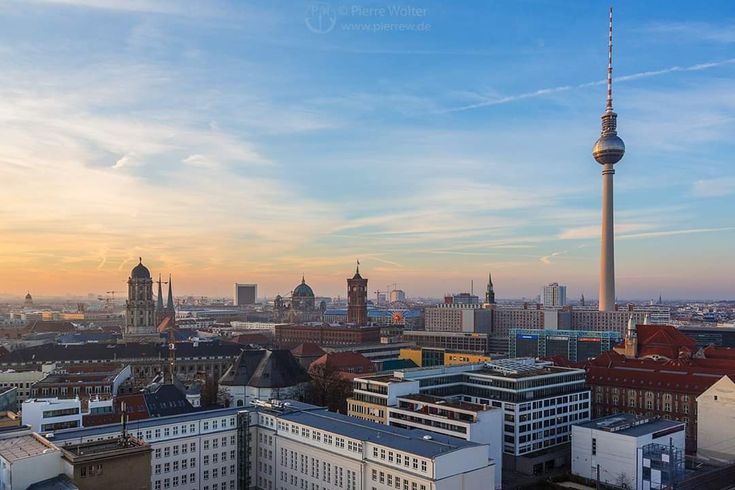
Ask ten Berliners where you should live, and you’ll probably get ten different answers. That’s because Berlin doesn’t feel like one cohesive city. Instead, it’s made up of 12 districts (called Bezirke), each with smaller neighbourhoods, or Kieze, that have their own vibe, community feel and cost of living. In Berlin, you can cross one street and feel like you’ve stepped into a completely different neighbourhood.
ESCP’s Berlin Campus is in Charlottenburg-Wilmersdorf, a relaxed and elegant district known for its parks, tree-lined streets and beautiful historic buildings. It’s also just a short bus ride from Kurfürstendamm, one of Berlin’s most popular shopping streets, lined with cafés, restaurants, cinemas and shops.
That said, many students choose to live in other parts of the city and commute to campus. Before signing a rental agreement, it’s worth exploring what each neighbourhood has to offer. From nightlife and culture to great restaurants and famous landmarks, Berlin’s highlights are spread across the city. That means there’s no single “best” neighbourhood to live in, even if Mitte looks like the obvious choice on a map.
Below is a district-by-district guide to help you weigh up your options, from the neighbourhoods closest to campus to the ones better suited to a weekend visit than a daily commute. Treat it as a starting point: every Kiez has its own personality, and the best way to get a feel for a place is still to walk it yourself. For more day-to-day tips, our Instagram page @escpberlincampus is also worth a follow.
ESCP’s location
ESCP’s Berlin Campus is located in the western part of the city in Charlottenburg-Wilmersdorf, with the nearest S-Bahn station being Westend, served by the Ringbahn lines S41 and S42, and several bus lines.
The Ringbahn is the train line that circles Berlin in both directions, making it easy to reach campus from almost anywhere near the ring. A couple of terms worth knowing as you get oriented:
- U-Bahn: the equivalent of the subway/underground
- S-Bahn: the equivalent of the overground train
Berlin is also an extremely bike-friendly city, and cycling can sometimes get you around faster than public transport.
Best neighbourhoods to live in as an ESCP student
Charlottenburg-Wilmersdorf: elegant and near campus
- Distance: 5–15 minutes by foot, bus or S-Bahn (where the Berlin Campus is)
- Best for: students who want to be right by campus with quiet, pretty surroundings
This is the area ESCP calls home: chic but relaxed, where historic landmarks sit alongside modern architecture and leafy green parks. It’s noticeably calmer and cleaner than many other parts of Berlin, giving you space to focus while staying connected to the city.
Running through the district is Kurfürstendamm, one of Berlin’s most iconic boulevards. Nearby, you’ll find highlights like Charlottenburg Palace, Savignyplatz and Berlin Zoo, as well as Zoologischer Garten, one of the city’s main transport hubs with fast connections across Berlin and beyond. Craving great food? Kantstraße is famous for its incredible selection of Asian restaurants of all types. If you’re looking for a shorter commute and a quieter place to live without missing out on city life, this area has a lot to offer.
Mitte (including Wedding): historic and central
- Distance: around 30–40 minutes by U-Bahn or S-Bahn
- Best for: students who want to be close to Berlin’s most iconic sights and city-centre buzz
Mitte is the historic heart of Berlin, home to landmarks like the Brandenburger Tor, Reichstag and Museum Island, alongside boutiques and trendy restaurants. It’s one of the most urban-feeling districts in the city, with shopping, culture and nightlife all close at hand.
Although Wedding is technically part of Mitte, it has a character all of its own. One of Berlin’s most culturally diverse neighbourhoods, it combines authentic, working-class charm with a growing creative scene. Rents are generally more affordable than in many central areas, making it a popular choice for students.
Friedrichshain-Kreuzberg: young and lively
- Distance: around 30–40 minutes by U-Bahn or S-Bahn
- Best for: students who want nightlife at their fingertips
Friedrichshain and Kreuzberg each have their own distinct character, but together they’re among Berlin’s most sought-after neighbourhoods for young people. They’re home to some of the city’s best-known nightlife, restaurants and markets, with a raw, creative atmosphere shaped by street art, graffiti and independent culture. Friedrichshain has the highest concentration of clubs in Berlin, a young population and good transport connections.
Kreuzberg is popular for its creative energy, large student community and strong Turkish influence. You’ll also be close to some of Berlin’s favourite hangout spots like Admiralbrücke, the Landwehr Canal, cafés and late-night bars. Just keep in mind that the atmosphere can change dramatically from one Kiez to the next.
Pankow (including Prenzlauer Berg): family-friendly and trendy
- Distance: around 30–40 minutes by S-Bahn
- Best for: students who want a calmer, cosmopolitan neighbourhood with a strong café culture
Pankow is safe and family-friendly, with plenty of green space and a residential feel, but for a livelier atmosphere, stick to the area of Prenzlauer Berg. Bordering Mitte, Prenzlauer Berg is known for its picturesque streets, independent cafés, cute boutiques and landmarks like Kulturbrauerei and Mauerpark. Its cool and cosmopolitan vibe makes it popular with students as well as young professionals.
Tempelhof-Schöneberg: green and alternative
- Distance: around 30–35 minutes by U-Bahn or bus
- Best for: students who want green space and a lively, alternative scene
Tempelhof-Schöneberg is home to Tempelhofer Feld, the former airport now turned into a huge open green space, great for jogging, cycling and picnics. Around Nollendorfplatz, Schöneberg is the heart of Berlin’s LGBTQ+ community, known for its welcoming atmosphere, historic gay scene, cafés and nightlife. The wider neighbourhood is also family-friendly, with tree-lined streets, plenty of local shops and ice cream spots. It’s another good choice if you want culture and a vibrant social scene all within the same neighbourhood.
Neukölln: creative and diverse
- Distance: around 35–40 minutes by U-Bahn or bus
- Best for: students drawn to an alternative, multicultural scene
Neukölln stands out for its cultural and ethnic diversity and its chill, alternative vibe. Expect a strong street food scene, vegan eateries, vintage shops, bars and brunch spots, plus easy access to markets like Schillermarkt. It’s a great pick if you want a neighbourhood with personality and plenty going on, without the higher price tag of more central districts.
Steglitz-Zehlendorf: green and residential
- Distance: around 25–30 minutes by S-Bahn
- Best for: students who want quiet, green surroundings after a busy academic day
This is a very residential part of south-west Berlin, with parks, impressive villas and several lakes, including Wannsee, Krumme Lanke and Schlachtensee. The Grunewald forest and Botanical Garden are also right on the doorstep. The main shopping street, Schloßstraße, keeps everyday errands easy, so you get calm and greenery without sacrificing convenience.
Best tips for choosing where to live
- Prioritise transport links over neighbourhood names. Choose a flat near a well-connected train station rather than picking purely by district if you’re weighing distances.
- Stay inside the Ring if you can. An apartment near a Ringbahn station, or anywhere inside the S-Bahn Ring, will generally get you to ESCP (and everywhere else in the city) within 30 to 45 minutes.
- Stay street-smart. Berlin is generally a safe city, but busier areas can see higher rates of pickpocketing and drug dealing, so keep the usual precautions in mind.
- Get a second opinion on your contract. Ask a German friend or contact to double-check your rental agreement for details you might otherwise miss, such as current rent control rules.
- Finally, take advantage of the support available through ESCP’s Student Experience Services team. From CampusLife resources and partner residences to dedicated housing webinars and one-to-one guidance, there are many tools available to help you find accommodation with confidence.
We can’t wait to welcome you at ESCP Berlin!
