
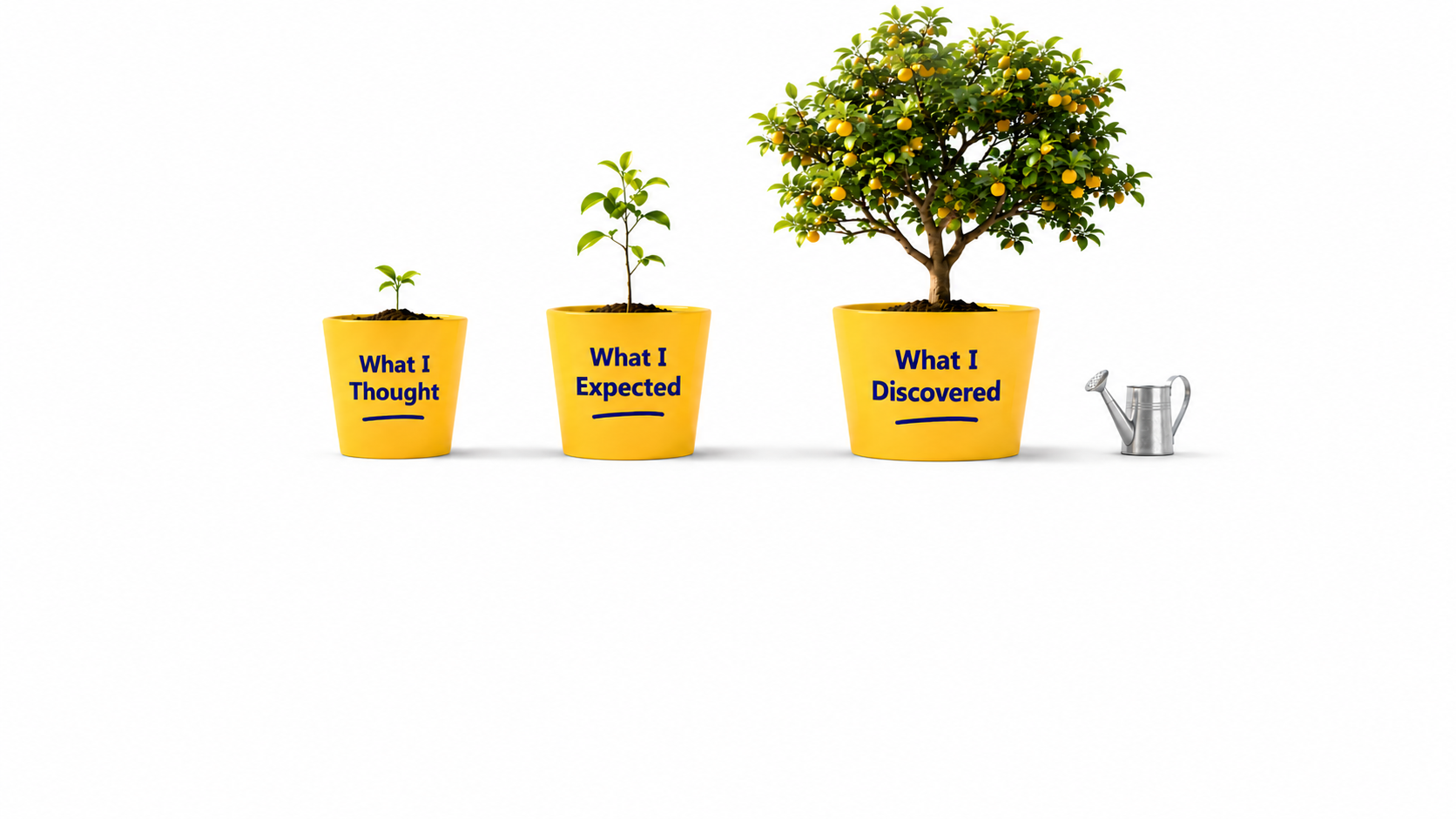
When most people hear “Real Estate“, they picture the same thing: someone selling luxury apartments in a coastal city, showing penthouses or great villas. It is the Miami realtor stereotype, as portrayed by TV shows and social media. But that image represents only a fraction of what this industry actually is.
Real Estate is, in reality, one of the broadest and most complex sectors in the global economy. It encompasses property investment, real estate development, brokerage, asset management, and Real Estate Investment Funds. It includes offices, logistics, retail spaces, student housing, hotels, data centres and much more. It is an industry that moves trillions of dollars and effects, in one way or another, practically every aspect of how we live, work and move.
I discovered this two years ago when I started working in the sector in Colombia. The first thing that struck me was not its size in financial terms, which is enormous, but its size in people. Because it is a giant industry in capital, but a surprisingly small one in number of professionals.
From Industrial Engineering to Falling in Love with Real Estate
I am Colombian. I studied industrial engineering in la Universidad de los Andes and specialised in finance. My original plan was investment banking, the most well-trodden path for someone with that profile. But after graduating I ended up at a financial consulting and asset management firm focused on real estate, and something within me shifted.
What struck me most at the beginning was not the financial complexity, but everything that goes into creating an ordinary building. A real estate project is not just a structure of concrete and glass. There are developers, architects, lawyers, urban planners, institutional investors, asset managers, brokers, insurers, and debt funds. There is land negotiation, market analysis, investment vehicle structuring, licensing management, and exit strategy. And all of that has to work in coordination, often over many years, before anyone opens the door of the building for the first time.
I fell in love with the complexity. And the more I understood the sector, the more I noticed something that would turn out to be one of its most defining characteristics: everyone in the industry knows each other. The sector is small. The same names appear again and again across different projects, different companies, different roles. Relationships are everything. Even in Bogotá, a city of more than ten million inhabitants, all the players in the real estate sector know each other.
Why I Needed More Than Finance
After two years as an investment analyst, it was clear to me that something was missing. The work was very financial – models, valuations, due diligence – and I was good at it. But at some point, I realised that if I kept going down that path, I would end up being just another person who knows how to use Excel, which is not a competitive advantage anymore. There are people who can build financial models in every single industry, and even more so nowadays with AI tools.
To make myself stand out, I needed to understand the industry as a whole. Knowing why decisions are made, not just how to calculate them. Understanding the actors, the dynamics, the friction points, the cycles. Having analytical judgement, not just math skills.
With that realisation I started researching options for learning the missing skills. I looked at several master programmes in different countries, and chose the MSc in Real Estate at ESCP. It was not an impulsive decision, it was the conclusion of understanding what kind of professional I wanted to become.
I wanted to learn the sector comprehensively: the laws that regulate it, the urban planning that shapes it, the funds that finance it, the sustainability agenda that is increasingly transforming it.
Seven Months In: What the Programme Gives You That You Did Not Expect
Seven months in, I can say I was not wrong.
The understanding of the sector I have now is qualitatively different from what I had before. I understand better how investment vehicles are structured, how urban planning shapes asset value, how sustainability has moved from being a trend to being a requirement. The programme is demanding, has a strong financial focus, and forces you to think about real estate across multiple disciplines at the same time.
In addition, the fieldwork is super interesting. We have visited shopping centres from the inside, not as customers, but understanding their operational structure, their lease contracts, their financial logic. We have toured logistics centres, hotels in the south of Spain, and we have seen Mareterra, the luxury real estate development in Monaco that is one of the most ambitious projects in Europe.
Those visits do something that no case study can fully replicate: they bring reality closer. Assets stop being abstract entries on a spreadsheet and become physical spaces with their own complexities, their design decisions, their management challenges. You understand the sector in a far more concrete way and, honestly, a far more exciting one.
The Real Value: People
In Colombia I had already learned that real estate is a relationship-driven industry. In Europe I have confirmed that it is exactly the same. No matter the country, the market or the asset type: this industry runs on trust, and trust is built with people.
The MSc in Real Estate (MRE) at ESCP puts you at the centre of a network that, in any other context, would take years to build. Through REAS, the Real Estate Association at ESCP, you have access to events with active industry professionals who come to the university; to conferences on market trends; to networking spaces with people who are making real decisions in the market right now.
We have sat alongside CEOs of major European real estate companies. Something interesting happens when you are next to them in an informal setting: you realise they are normal people. With doubts, with stories of failure, with careers that did not follow a straight line. And that, more than any lecture, helps you dream. Because if they were able to build something great starting from nothing, so can you.
During the programme we had the opportunity to attend MIPIM, one of the most important real estate events in the world. It is the kind of event you would normally reach after ten years in the industry. Also, as ESCP students, we are members of the Urban Land Institute, another global reference for sector professionals.
These opportunities are not incidental. They are part of what defines the learning experience. And their value is not measured in the moment they happen, but in the years that follow when the person you met at an event turns out to be the one who opens a door, makes an introduction, or gives you a perspective that changes how you see an opportunity.
What I Wish I Had Known Before Arriving
The master’s is very good. The training is solid, the financial focus is rigorous, and the vision it gives you of the sector is broad. But if I could tell someone who is about to start one thing, it would be this: arrive ready to network for real.
Not the uncomfortable networking of exchanging business cards without knowing quite what to say. But the kind where you have real conversations, show genuine interest, ask intelligent questions and build relationships with intention. Because the programme puts opportunities in front of you, but making the most of them is up to you.
There is something else worth not forgetting: your classmates. They are future professionals in the European real estate sector. Some will work in funds, others in development, others in consulting or banking. Over time, they will be part of the professional network that defines your career.
For those of us who come from outside Europe, this has an added dimension. We arrive without local contacts, without market references, sometimes with a language barrier and, at times, with the biases that exist towards professionals from emerging markets. That initial disadvantage is real. But it is also surmountable and the ESCP environment is precisely the place where it is overcome fastest.
A Final Thought
In real estate, most of the people say the most important thing is “Location, Location, location”, but for me it is “Relationships, Relationships, Relationships”. Assets depreciate, markets shift, regulations evolve but well-built relationships last decades and generate opportunities that no financial model can predict.
Opportunities in this industry rarely arrive on their own. You have to go and find them, build the conditions for them to happen, and be present when they appear. The MSc in Real Estate at ESCP gives you that context. What you do with it is up to you.
About the author

Nicolás Camacho is an MSc in Real Estate candidate at ESCP Business School, studying between Madrid and London. He holds a degree in Industrial Engineering with a minor in Business Administration and Entrepreneurship from Universidad de los Andes in Colombia, where he first discovered his interest in finance. After an internship as a financial analyst at Ecopetrol, the largest company in Colombia, he started his career at Kiruna Capital Partners in real estate investment and asset management, working across multiple asset classes and combining his interest in finance with a lifelong passion for buildings and urban development. After nearly two years in the sector, he moved to Europe to gain a more international perspective of the industry, supported by scholarships from ESCP and the Colfuturo program
