


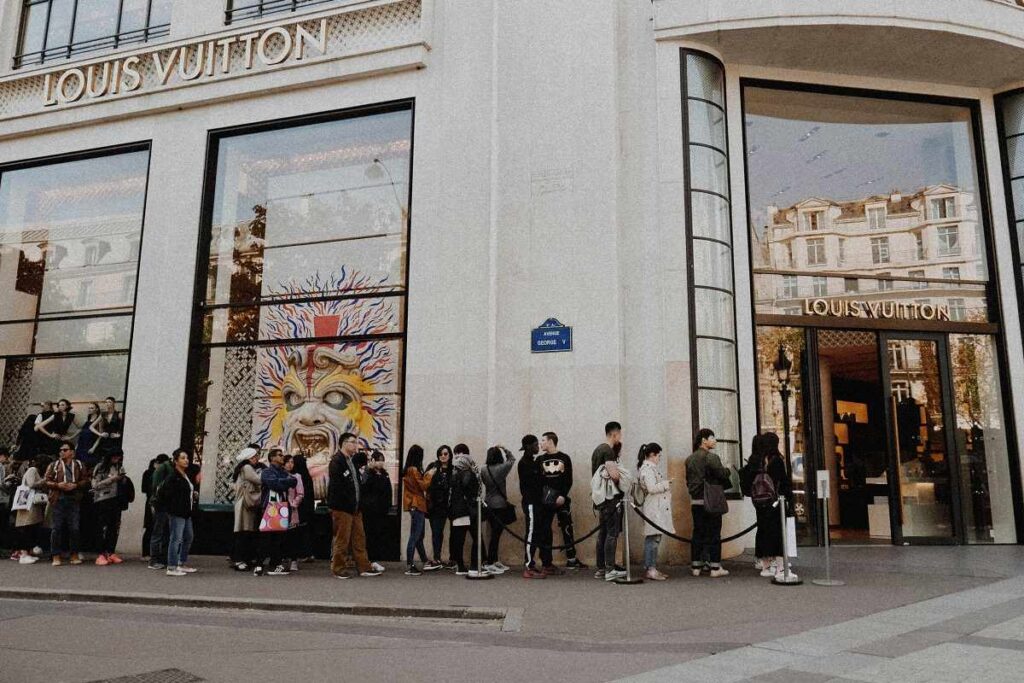
Imagine spending €8,000 on a handbag.
Not because you need one. Because you’ve worked hard, reached a career milestone, and decided to celebrate.
Now imagine discovering that buying it is the hardest part. The boutique can’t tell you when it will be in stock. You can’t reserve it. You can’t pre-order it. You can’t even be notified when it arrives. Your best option? Keep coming back and hope for the best.
For decades, luxury brands have built desire around scarcity. The harder something is to obtain, the more valuable it can appear. But is making customers chase a product still the best way to make them feel special?
New research suggests the answer may increasingly be no.
According to a review of 109 academic studies by Solon Magrizos (University of Birmingham), Maria C. Voutsa (Cyprus University of Technology) and Minas Kastanakis (ESCP), luxury is undergoing a quiet transformation. The industry’s future may depend less on making people feel wealthy and more on making them feel better.
The limits of status
Luxury has traditionally been associated with status. The watch. The handbag. The sports car. They all signal success. And they often deliver an emotional high. But that high tends to fade.
The researchers found that traditional luxury is most often linked to the excitement that comes from acquiring something exclusive. Experiential, sustainable and purpose-driven luxury, by contrast, is more likely to contribute to longer-lasting wellbeing through personal growth, relationships and meaningful experiences. In other words, not all luxury creates the same kind of happiness.
That’s a significant shift for an industry built on the power of symbols. Luxury is moving from “Look what I have” to “Look how this makes me live.”
When the experience becomes the product
This changes what luxury brands need to compete on.
A beautifully made product is no longer enough if the experience surrounding it feels frustrating, impersonal or transactional. Increasingly, consumers expect premium brands to understand that what they’re really paying for is not just exceptional craftsmanship but exceptional treatment.
That doesn’t mean abandoning exclusivity. It means recognising that exclusivity and inconvenience are not the same thing. A waiting list can create anticipation. Poor communication creates irritation. A brand that wastes time risks undermining the very premium it is trying to justify.
The brands that create memorable experiences, thoughtful service and genuine personal connections are more likely to generate lasting loyalty than those relying on status alone.
Luxury is moving from “Look what I have” to “Look how this makes me live.”
The rise of transformational luxury
The researchers call this shift transformational luxury. Instead of focusing solely on ownership, transformational luxury asks a different question: Does this purchase improve my life?
That improvement might come through a wellness retreat rather than a watch. A once-in-a-lifetime travel experience rather than another designer accessory. A sustainable luxury product that reflects a customer’s values as much as their taste.
For businesses, this is more than clever marketing. It changes how products are designed, how services are delivered and how success is measured. If customers increasingly judge luxury by how they feel after the purchase, then every interaction becomes part of the product.
A new definition of value
The luxury industry has always understood the power of desire. But today’s most valuable currency may not be access to a rare product. It is the feeling that a brand genuinely enriches your life through experiences that feel personal, authentic and genuinely rewarding.
For many affluent customers, the greatest luxury isn’t owning one more expensive object. It’s the feeling that a brand understands their priorities, respects their time and makes life easier rather than more complicated.
The brands that succeed over the next decade may not be those that make customers work hardest to own their products. They may be the ones that leave customers feeling that every interaction was worth the premium.