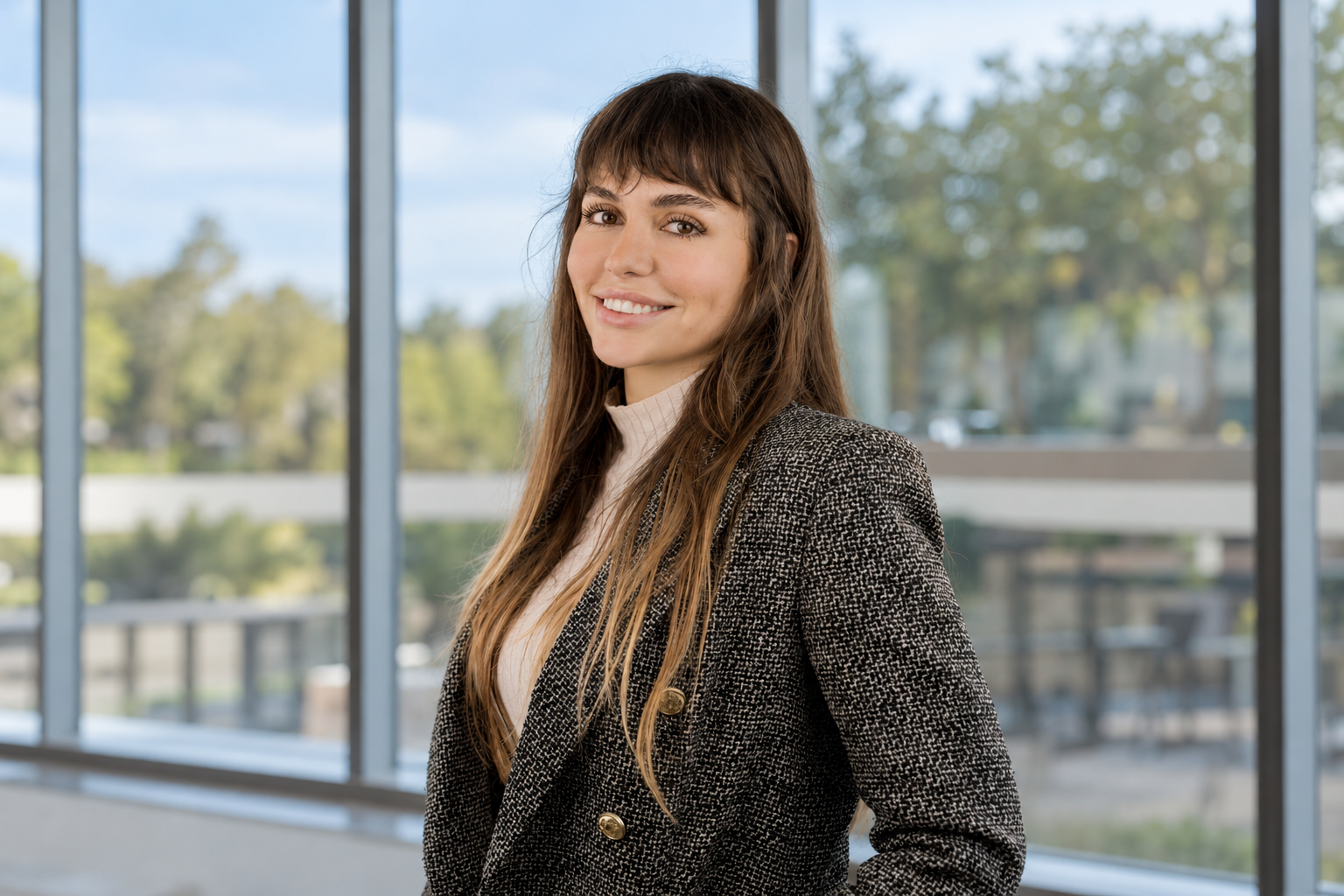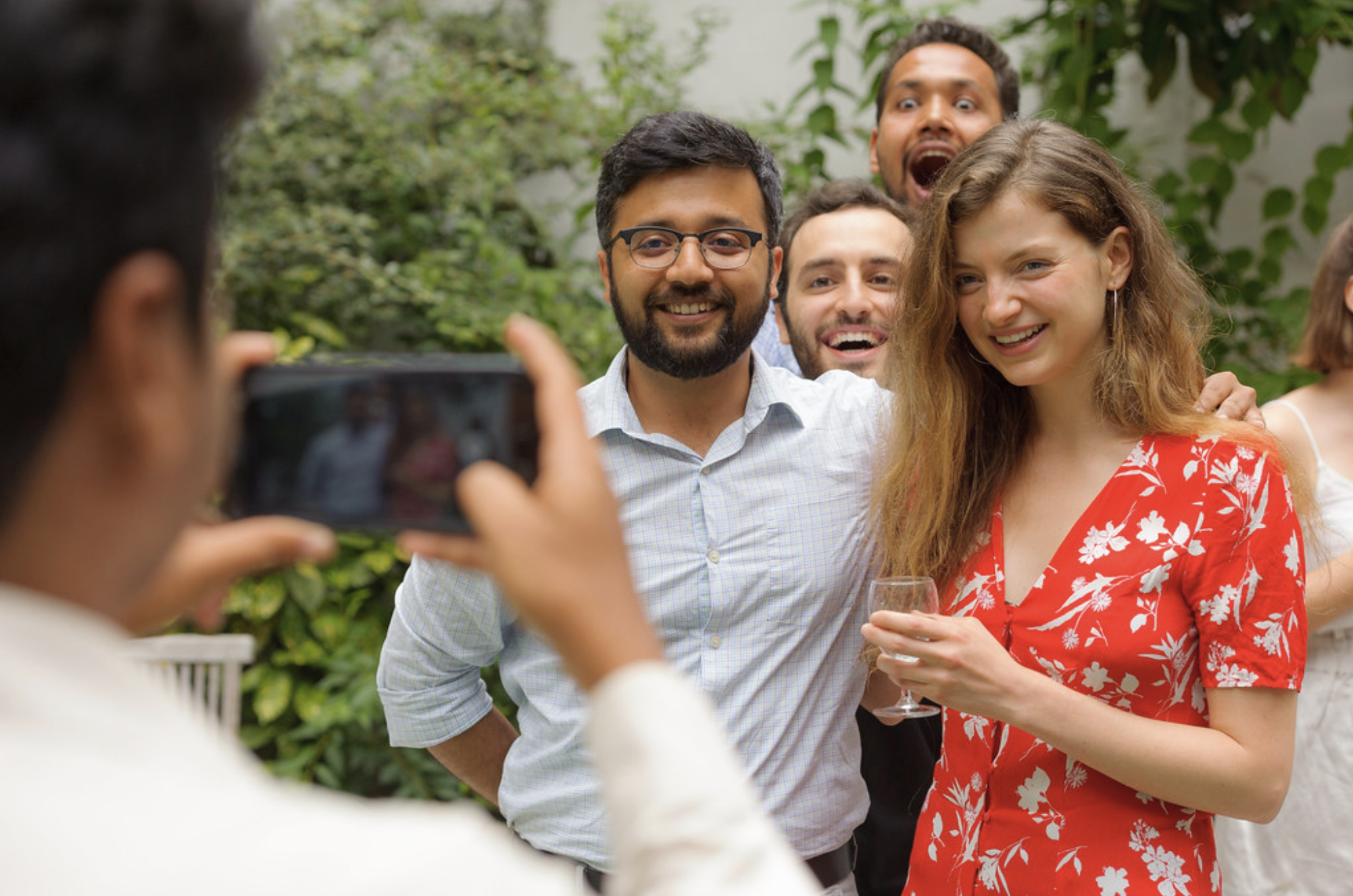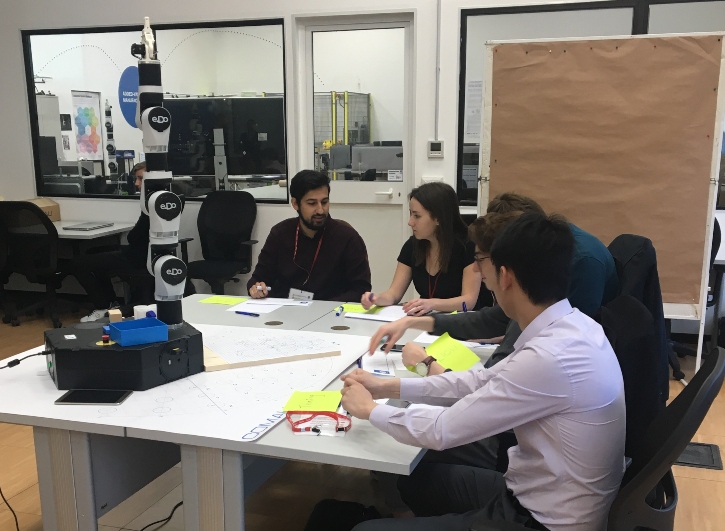

It is the 20th of March 2026, and the ESCP Berlin Campus has the particular quiet of a place on the eve of something: Tomorrow, the Bachelor in Management (BSc) Class of 2026 will graduate. Today, a small group of them have come in voluntarily to be filmed as programme ambassadors: a generous, unhurried final act for a journey they are about to officially close.
In between takes, conversations unfold. Zoé Coulloux, raised in Paris, who found in the Bachelor’s multi-city structure exactly the international dimension she had been looking for. Amaani Chirag, British-Indian, born in London, schooled in Jaipur, who arrived at ESCP on the recommendation of a family friend who had lived this exact experience before her. Manuel Peña Fernández, from a small town in Spain, who came across the programme almost by accident while browsing dual degree options at the University Carlos III in Madrid, and found himself, three years later, calling Berlin his favourite city in the world.
Three very different paths in. And yet, as the afternoon stretches on, something coherent and unmistakable begins to emerge: a portrait of a generation with its own particular set of priorities, questions, and convictions.
A Different Kind of Ambition
What do you want to become? It is the question every graduate gets asked, and the answers say as much about the moment as about the person.
A few years ago, BSc graduates tended to answer quickly, and with precision. Finance. Luxury marketing. Management consulting. A specific title, a specific sector, a clear ladder to climb. The ambition was legible, almost architectural.
The Class of 2025 pauses a little longer. Not because they lack direction, but because the direction they are following is harder to name.
« I feel I’m analytical, but also very human, » says Manuel, who completed an internship in strategy consulting at Accenture and is currently working at Amazon. « I’m not this finance guy. I feel I thrive more on understanding the customer and building things that help people. »
Zoé, who spent part of her studies interning in communications and social media, is equally clear about values if not yet about destination. She wants to work in an environment where she is moving, talking to people, doing things, never behind a screen. And she wants the company itself to stand for something. « I wouldn’t want to work in a fast fashion company that does horrible things to the planet. That’s not negotiable for me. »
Is this generation less driven than those before them? That would be too easy a conclusion, and almost certainly wrong. What seems to have shifted is not the level of ambition but its grammar. Purpose has become the primary coordinate; position is secondary. Whether this reflects a deeper change in values, a rational response to an unstable job market, or simply the natural result of a programme that asks students to spend three years discovering themselves rather than optimising for a predetermined destination (probably all three) is a question worth sitting with.
The Course Nobody Expected to Love
Every cohort has its favourite courses, and they usually say something about the moment. A few years ago, the answers clustered around General Management, Strategy, Finance. What does it tell us that this year, three students from different campuses, who took the same elective with entirely different professors, all gave the same unprompted answer?
Self-Awareness.
« Everyone thought it was going to be a bit weird, » admits Amaani. « But I took it because I read the description and thought, this is really interesting. And it really, really helped me discover myself. I would say it was the before and after: that’s where I started to understand that I want to make my career in sustainability. »
Her Berlin cohort was set a final project that has stayed with her. Dropped, phoneless and moneyless, at a random location in the city, they had to find their way to a given destination on foot by asking strangers for directions. Three hours. No GPS. Snow. « It really reminded us to stop looking at our phones. We’re so used to just navigating everywhere on a screen. Talking to someone. Do you remember that? »
Manuel, who took the course in London, remembers having to justify it to friends back home. He told them he had a self-awareness class he was really enjoying. They were sceptical. « But actually, how can you be successful if you’re not self-aware? It’s impossible, » he adds today.
Three cities, three professors, three completely different exercises. The same answer. Somewhere in that convergence is something worth noticing. Not just about this programme, but about what this particular generation seems to have been looking for while paving their path.
Societies, Grades, and the Trade-Off They Made Knowingly
The CVs of BSc graduates tend to be dense with extracurricular involvement: society roles, student union positions, events co-organised, campaigns run. What stands out about the Class of 2025 is not the quantity of that involvement, but the depth of ownership they brought to it.
Zoé served as President of the ESCP European Society, organising visits to the UK Parliament, conferences, student events. Amaani navigated the complexity of Agora, ESCP’s cross-campus student union, fielding calls from other campus representatives long after her own mandate had formally ended. Manuel ran parties, managed venues and sponsors, calculated drink orders and negotiated with club owners he had never spoken to before. « I thought we’d get more guidance. But no. We had to reinvent ourselves. Go club by club. It was a bit of real life. Logistically organising a party is so much harder than it looks. »
All of this, of course, sat alongside a full academic programme. A balance to manage, and a choice to make.
« It’s doable to get a decent grade if you just study for the last month. To get a really good grade, you need to study full-time, » says Zoé, with the candour of someone entirely at peace with the choice she made. « I think most of us traded being super involved in the community for having a decent grade rather than a perfect one. And honestly, if you’re not in societies, you’re wasting a lot of the experience. »
Every student navigates this differently, and there is no single right answer. For this group, the extracurricular investment was not a distraction from the programme. It was, in many ways, the programme.
Graduating Into the Age of AI
The Class of 2025 has a distinction that no previous cohort can claim. They are the first to complete the entire Bachelor in Management (BSc) in what can now unambiguously be called the AI era, not as a theoretical future concern, but as a daily, structural reality reshaping the professional world they are about to enter.
They are clear-eyed about what this means. Entry-level roles are contracting. Consulting, finance, and digital positions that once offered a predictable first step are being restructured. « Companies are hiring fewer juniors, » Manuel notes. « It’s really affecting us. The job market in Europe is already hard, and AI is making it harder. »
And yet the concern is paired with something more interesting than resignation. Because this cohort has also spent three years developing precisely the skills that are the hardest to automate: cultural intelligence, self-awareness, the ability to walk into a room in a new city where they do not speak the language and figure it out. The Bachelor, almost by design, trains for disruption.
Amaani gestures towards something broader. She is not afraid of AI, exactly. She is aware of it, using it, thinking around it. What she is focused on is the kind of work that still requires a human in the room: work that moves, connects, creates. And she is thinking, deliberately, about which sectors are more likely to remain that way.
« The hard skills? AI is going to be able to do those faster and faster, » Manuel reflects. « But the soft skills, the intercultural skills, learning how to communicate with people from completely different backgrounds. I think that’s what’s going to be valuable. »
Whether that instinct is strategic or simply personal, it may turn out to be exactly right.
Three Cities, Several Selves
And then there is the experience itself.
Three years, three European capitals, three entirely different environments in which to discover what you are actually like when the comfort zone is hundreds of miles away.
Manuel arrived in Berlin braced for another international city, broadly similar to the others. He found something quite different: a place that felt harder to read, more spread out, linguistically inaccessible in a way none of his previous experiences in the US, Spain or France had prepared him for. Three months later, he had found his rhythm. Today, Berlin is his favourite city in the world. He is learning German and thinking about staying.
Amaani came to London expecting familiarity (she had been born there) and found a lesson in how much she had changed in the years since leaving. The adjustment to independence, to managing her own budget, to sitting alone with her thoughts without the constant proximity of family and community she had known in Jaipur, was harder than she had anticipated. « I was sitting alone with my thoughts and didn’t know what to do with that. » But London was where the work began. Turin, which followed, was where it began to make sense.
It is a pattern the programme seems to quietly rely on. The discomfort of the first campus is rarely wasted. What feels like difficulty in the moment tends to become, by the third year, the precise thing that made everything else possible.
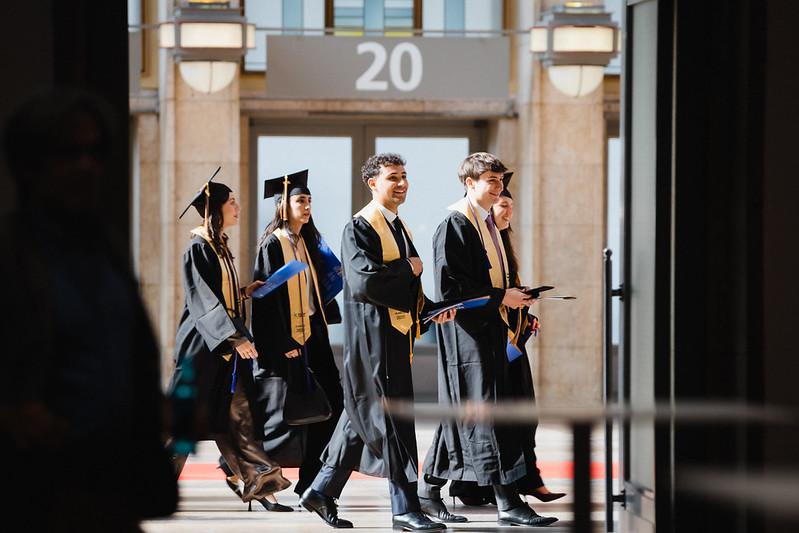
Tomorrow, Zoé, Amaani and Manuel will collect their degrees and formally join our alumni community. They will carry with them, alongside the academic credentials, the internship experience and the society roles, something harder to quantify: three years of learning to be uncertain and perfectly grounded at the same time.
In the age they are graduating into, that may be the most valuable thing of all.
Interested in joining the next generation of BSc students at ESCP Business School? Discover the Bachelor in Management (BSc) and begin shaping your future today.