There are students who attend a business school, and then there are those who seem to inhabit it. Lulwa Naman belongs firmly to the second category. Currently completing her Bachelor in Management (BSc) at ESCP, Lulwa’s journey through the programme reads less like a linear academic path and more like a carefully layered experiment in leadership, creativity and responsibility.
Born in Paris to Kuwaiti and Lebanese parents and raised in Geneva, she grew up navigating cultures, languages and expectations with ease. Creativity was never an extracurricular add-on. It was foundational.
She plays six instruments, trained in theatre from a young age, and wrote and produced fundraising musicals that supported children’s education in Zambia. “At the heart of everything I do is storytelling,” she says, whether on stage or through branding and marketing.
That instinct would later find unexpected structure inside our classrooms, becoming the thread that connects everything she has built during her years at ESCP.
Beyond the classroom: where leadership is tested
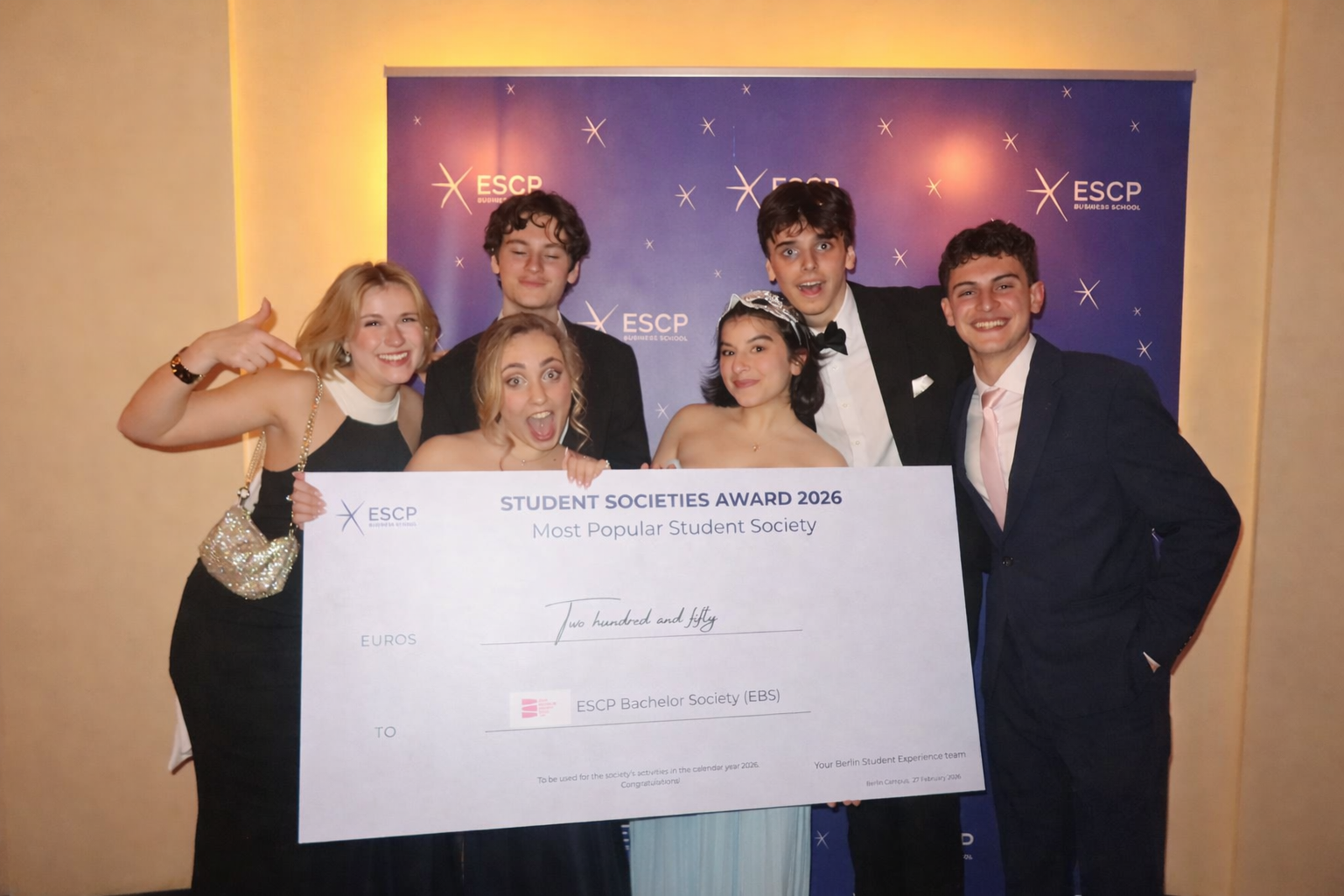
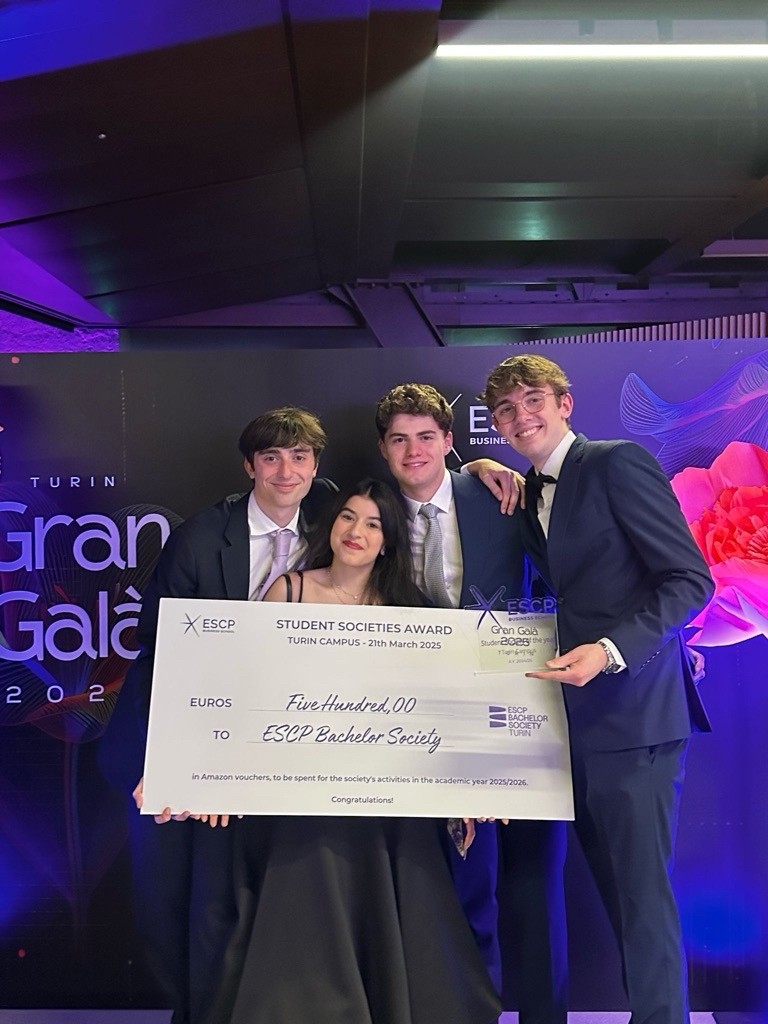
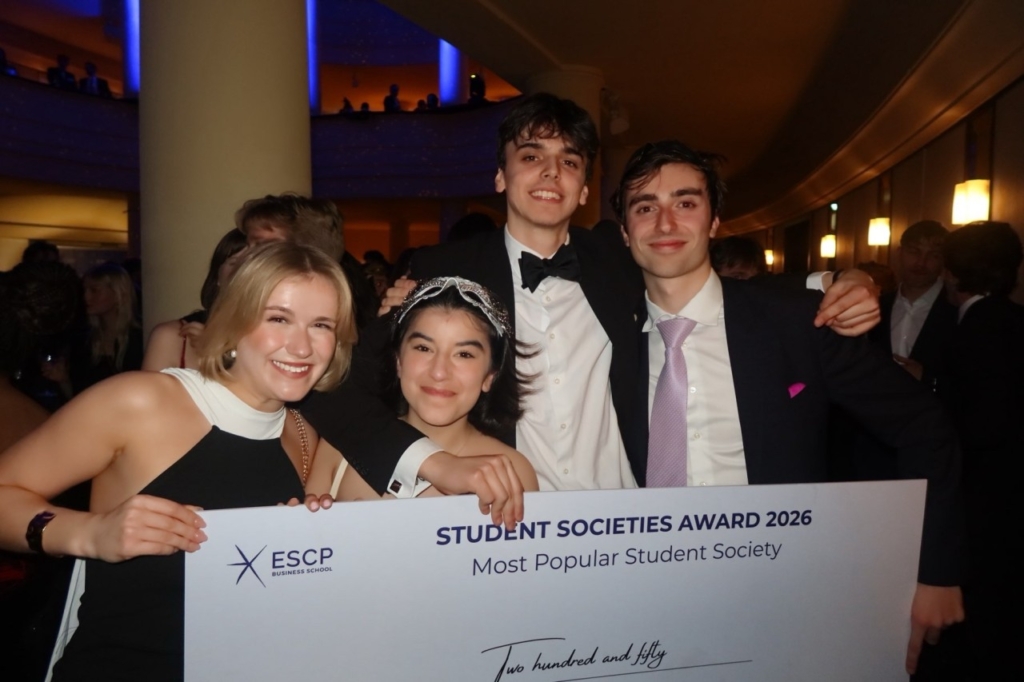
If the ESCP Bachelor is known for anything, it is the space it leaves for students to step outside the syllabus. Lulwa stepped straight in. What began as an Events Associate role within the ESCP Bachelor Society in Paris quickly evolved into Vice-President in Turin and, today, President in Berlin. Parallel to this, she served as Head of Events and later Co-President of the Students’ Philanthropic Foundation, while also acting as a class representative within Agora ESCP Student Union.

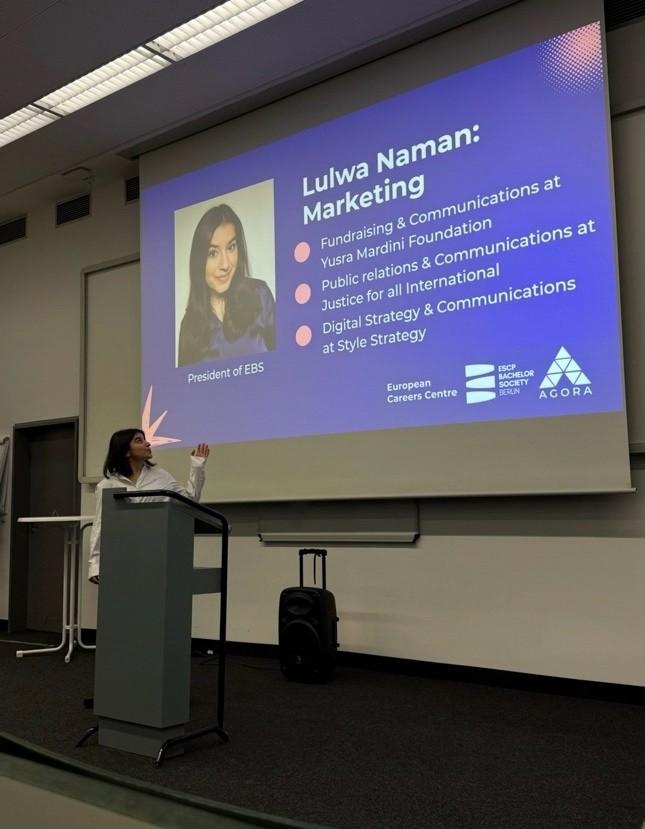
This was not résumé-padding. It was immersion. “Leadership is not about authority, but about responsibility and mediation,” she reflects, describing her experience as a class representative. Listening, structuring feedback, negotiating between expectations and constraints. These were not abstract concepts, but weekly realities.
The scale matters too. Managing multi-campus initiatives, overseeing departments, working with sponsors and partners. These are environments where mistakes are visible and accountability is real. And yet, this is precisely where the Bachelor seems to do its quiet work: allowing students to try, fail, adjust and lead again while the stakes are high enough to matter, but low enough to learn.
When theory stops being theoretical
What turns experience into learning is structure. For Lulwa, that structure came from the classroom. Courses such as Marketing, Global Brand Management and International Business Strategy did not sit apart from her extracurricular work. They fed directly into it.
“Global Brand Management reframed branding as storytelling with structure,” she explains. Concepts like positioning, coherence and long-term brand equity became tools she applied immediately to the Bachelor Society. Events were no longer isolated moments; they became part of a recognisable and trusted identity. Strategy courses shifted her decision-making from reactive to intentional. Even negotiation classes surfaced in conversations over venues, sponsorships and expectations.
Before ESCP, she approached communication intuitively. During the programme, she learned to ask different questions. Who is this for? What behaviour are we trying to influence? How will we measure impact?
But the Bachelor did not replace creativity; it rather disciplined it.
- READ ALSO: How ESCP Business School’s Bachelor in Management (BSc) Programme Merges Theory with Practice
Preparing for work by doing the work
Perhaps the most striking element of Lulwa’s journey is how little separation there is between “student life” and professional preparation. Internships in communications, human rights advocacy and digital strategy run alongside her studies. Fundraising campaigns are designed, budgeted, executed and evaluated in real time. Leadership becomes less a title and more a service.
“I don’t see academics and extracurriculars as competing forces,” she says. “They complement each other.” It raises an interesting question: how many students graduate feeling they have already worked in the environments they aspire to enter?
Lulwa entered the Bachelor knowing she wanted a long-term artistic future, but without a defined professional path. What ESCP offered was not an answer, but a framework. One where creativity meets structure, where storytelling becomes strategy, and where experimentation is not postponed until after graduation.
As she looks ahead, her ambition is clear but not narrow. Brand strategy, the entertainment industry, purpose-driven organisations. Spaces where narrative shapes perception and value.
ESCP did not tell her who to become. It gave her the tools to test it for herself.And perhaps that is the quiet promise of the Bachelor experience.
Not certainty, but readiness.
Ready to unlock the endless opportunities of a global, well-rounded academic journey in Management with ESCP Business School? Discover our Bachelor in Management (BSc) and begin shaping your future today.