Choosing a degree brings with it the responsibility to correctly lay the first paving stone towards the future. To make an informed decision, it is essential to clearly understand all the options at one’s fingertips.
The BA, BSc, and BBA may seem similar in their names, but they differ substantially in their content. In fact, when evaluating them, it is not uncommon to feel that choosing one involves leaving behind the peculiar opportunities offered by the others.
At ESCP Business School, we designed an academic path that effectively overcomes the perceived opportunity cost. Our Bachelor in Management (BSc) combines some of the most appreciated characteristics of the three types of degrees while still remaining true to its scientific nature.
Before delving into the details of this peculiar programme, let’s get to know the BA, BSc, and BBA better.
BA, BSc, and BBA. Let’s start with the basics
BA stands for Bachelor of Arts and allows for more comprehensive and less specialised education, dedicated to developing communication, analytical, and writing skills. The label typically includes studies such as Languages, Arts & Music, Communication, and most of the Humanities disciplines.
A Bachelor of Science (BSc), on the other hand, is slightly more focused on a narrower set of scientific subjects and trains students to see things from a functional, mechanical, and practical perspective. The BSc is typically the title for degrees in Sciences (Computer Science, Engineering, Health Sciences, etc.) and some degrees in Business, Law, or Architecture.
Finally, BBA stands for Bachelor of Business Administration. This programme prepares students in management disciplines to cover Marketing, Education, Public Administration and Sales positions. Generally, the programme provides a specialisation in its last year.
The BBA is more focused on specific concentrations than a BA, providing a solid foundation in business courses and helping students build managerial skills. Although the BBA also includes courses in algebra and mathematics, these typically remain at a basic level and do not allow the acquisition of advanced computing or finance skills, unlike in a BSc.
- READ MORE: Empowering Ambitions: Exploring Excellence in ESCP’s Bachelor in Management (BSc) Programme
The ESCP Bachelor in Management (BSc). Learning all that matters
The Management degree offered by ESCP Business School is undoubtedly aimed at young talents who do not want to compromise on education.
As a matter of fact, this programme of excellence perfectly balances the managerial courses representative of a BBA with advanced scientific teaching distinctive of a BSc. It also adds liberal arts and languages to the equation, to prepare students for top positions in international and multicultural business environments.
The mastery of this programme’s design lies precisely in the ability to go in-depth on the main fields of business knowledge, without losing sight of the broader context.
”Deep learning cannot get far without the ability to look beyond what you see. At ESCP, we nurture your critical thinking by systematically challenging the premises of specialisation through cross-fertilisation over disciplines and inclusivity of the most relevant bodies of knowledge to educate future leaders,” says Professor Robert Sheldon, Academic Director of the Bachelor in Management (BSc).
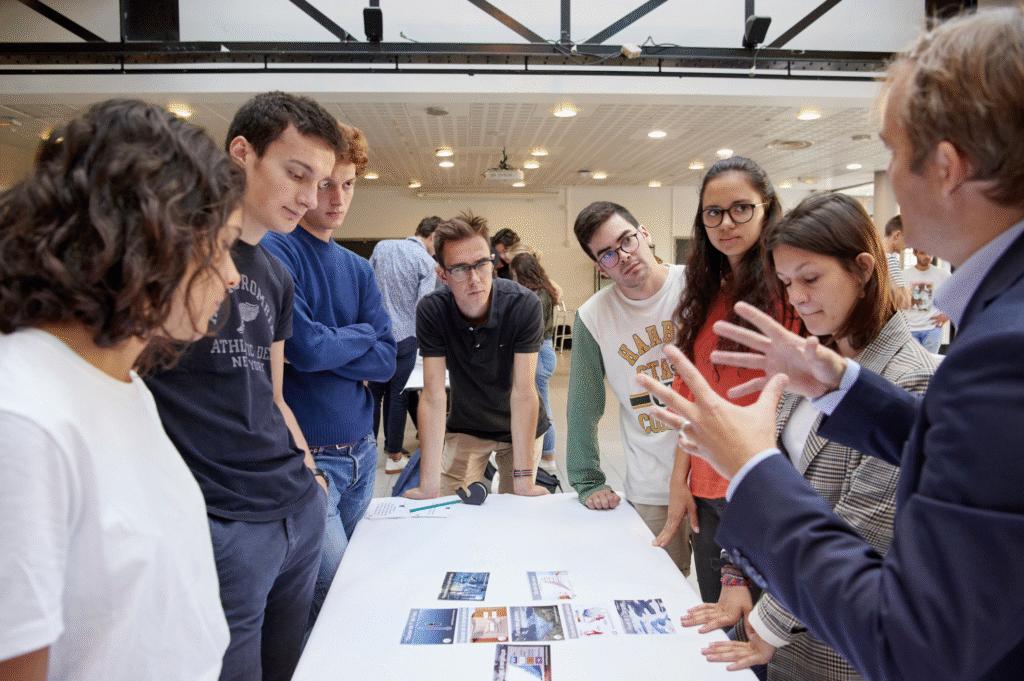
The BSc Curriculum perfectly reflects this approach. Alongside advanced Mathematics, Statistics and Accounting, we find Finance, Marketing, and Economics. But there is even more. Modules such as ‘Introduction to Psychology and Sociology‘, ‘Presentation, Discussion and Rhetoric Skills‘, ‘Intercultural Skills‘, and others complete the picture of a well-rounded education.
After the degree. Academia, international companies and entrepreneurship
Regardless of the chosen degree, the only limitations for your future are the ones you put on yourself. However, if your plans after graduation are already set, the right Bachelor can already act as an ally on this path.
The theoretical nature of a BA perfectly prepares students for careers as researchers or professors, especially in the Humanities. If, on the other hand, you want to continue your studies in science, engineering, finance or data analytics, a BSc is undoubtedly the best choice. ”Our students have proved it by accessing several of the most prestigious Schools worldwide, securing access not only to further business and management studies but also successfully integrating prestigious master programmes in the humanities field”, adds Academic Director Sheldon.
On the contrary, the BBA’s practical nature, aimed at quick and direct entry into the world of work, makes it more difficult to access a high-level university career.
The Bachelor in Management (BSc) also acts as a springboard for a global career. The professional integration rate is excellent, as 98% of employed graduates fill relevant positions at leading firms such as McKinsey, BCG, Accenture, and Deloitte. The several hands-on activities offered by the programme – Project Works, Collective Projects, and the possibility of an internship at the end of each year – ensure that our graduates enter the companies already provided with significant work experience.
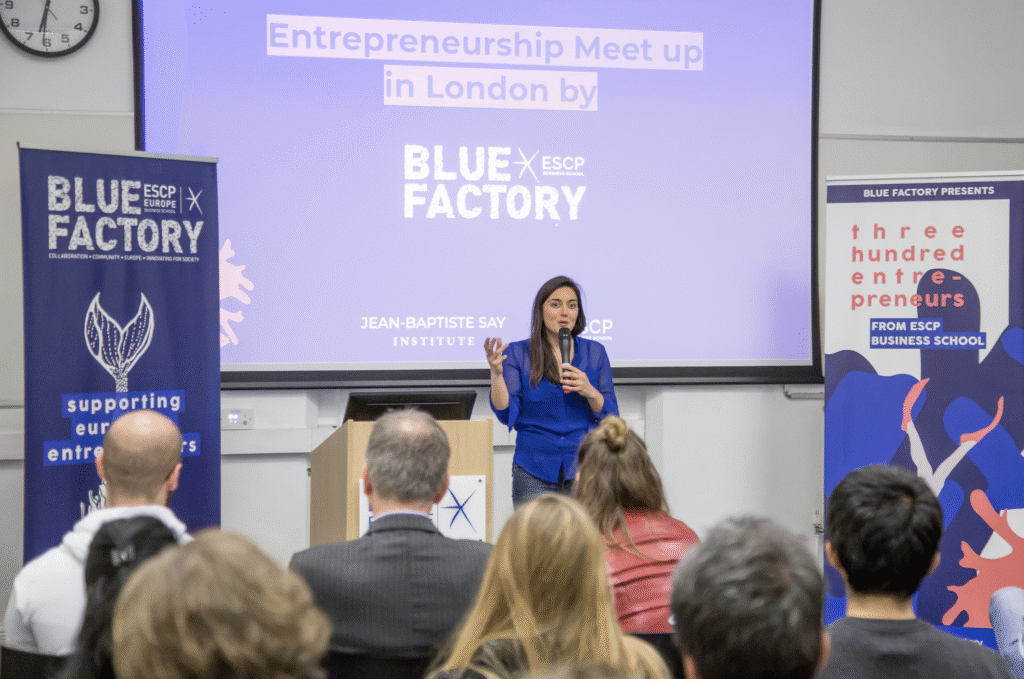
The business skills acquired, combined with in-depth technical knowledge, also allow many of our students to embrace entrepreneurship and launch innovative startups, in some cases already during their studies. This is the case for STAIY, the first sustainable fashion marketplace funded by five BSc Alumni. Or the example of The Blue Factory, a Paris-based startup incubator, launched by a group of ESCP graduates already in the early 2000s.
Finally, our BSc offers our students an even more significant opportunity. For those who begin their academic career without having narrowed their vision yet about what to do ‘after,’ the programme’s completeness and openness empower them to explore numerous fields and possibilities serenely, with the certainty that all the doors remain widely open.
Take the challenge
”If you are talented and motivated, you can prove your value on papers and testify to your motivation and strength in open conversation during our interviews.
Do not hesitate. We look for bright students and serious individuals who are ready to work hard, keen to explore and learn, willing to challenge themselves, and curious enough to embark on a true and immersive multicultural adventure over the next three years of their life,” concludes Professor Sheldon. ”A life where open-mindedness, dedication, and the ability to discover and reinvent yourself will be the basis for the transformational skills the world of tomorrow demands nowadays.”
Are you interested in a 3-year Bachelor in Management degree with an international focus and real-world experience?
Receive more information on the programme, course fees, scholarships and more.